
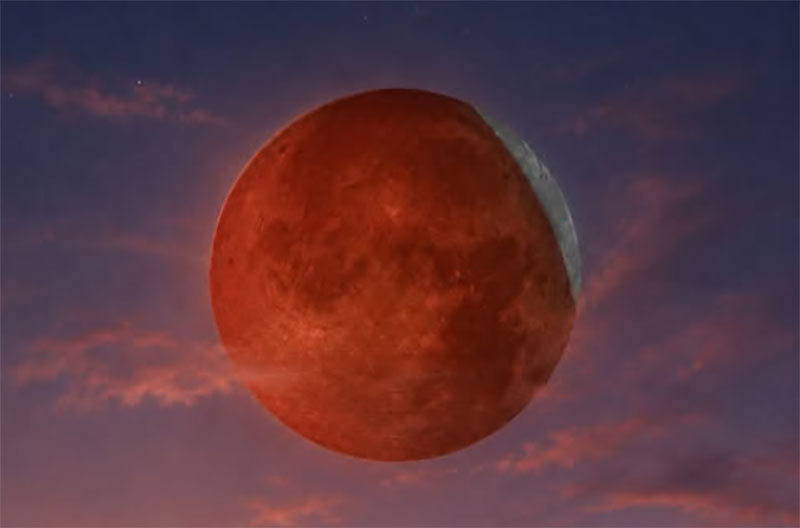
The Solar Eclipse 2026 was one of the most impressive astronomical events visible from the United Kingdom in recent years. On Wednesday, 12 August 2026, the Moon passed directly between the Earth and the Sun, creating a spectacular deep partial solar eclipse across the UK and Ireland.
Although the UK was outside the path of totality, the eclipse was unusually deep. Depending on where you were, approximately 90% to 96% of the Sun was covered by the Moon. London saw around 90%, while parts of Cornwall experienced roughly 95% coverage. (rmg.co.uk)
So, what did Solar Eclipse 2026 actually look like?
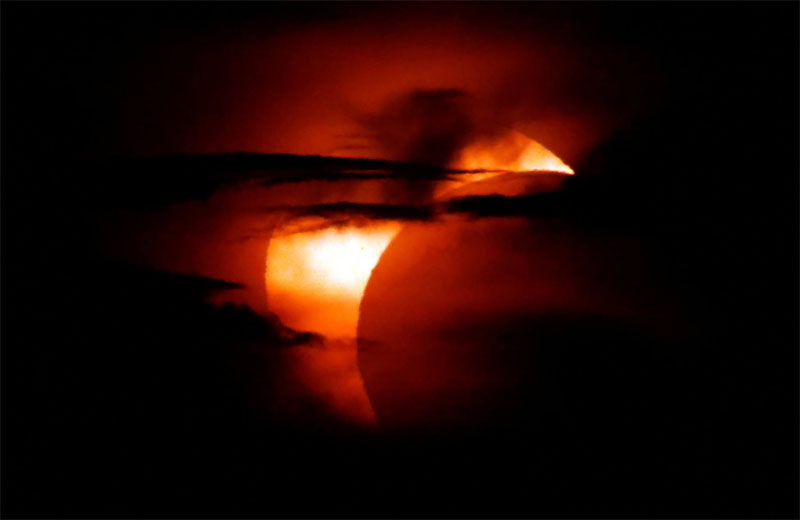
From the first moment the Moon touched the Sun to the final stages near sunset, the appearance of the sky gradually changed. The Sun became a thin crescent, daylight became noticeably dimmer, and the event created an unusual atmosphere across Britain.
This guide explains what people could see during Solar Eclipse 2026, how the eclipse changed throughout the evening, and why the event was so special.
What Is a Solar Eclipse?
A solar eclipse occurs when the Moon passes between the Earth and the Sun and blocks some or all of the Sun’s light from reaching a particular area of Earth.
The amount of the Sun covered depends on the observer’s location.
During a partial solar eclipse, only part of the Sun is hidden.
During a total solar eclipse, the Moon completely covers the visible surface of the Sun for observers inside the narrow path of totality.
On 12 August 2026, totality was visible in parts of Greenland, Iceland and northern Spain, while the UK experienced a very deep partial eclipse. (rmg.co.uk)
What Did Solar Eclipse 2026 Look Like From the UK?
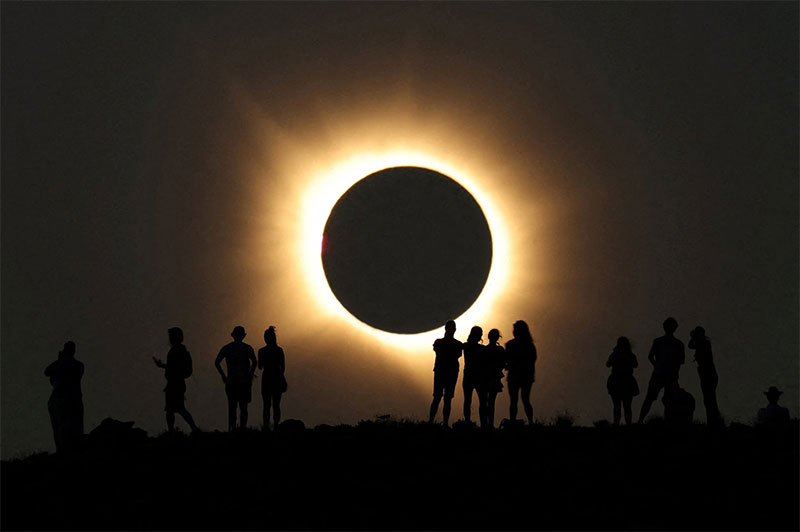
From the UK, the most obvious feature was the large dark shape of the Moon gradually moving across the bright face of the Sun.
At the beginning, only a small section of the Sun was covered.
As the eclipse progressed, the covered area became larger and larger until, at maximum, only a relatively small bright crescent of the Sun remained visible.
In many parts of the UK, this happened while the Sun was already getting low in the western sky.
The combination of a heavily eclipsed Sun and the approaching sunset created a particularly unusual view.
The Sun Became a Thin Crescent
One of the most striking parts of the event was the appearance of the Sun at maximum eclipse.
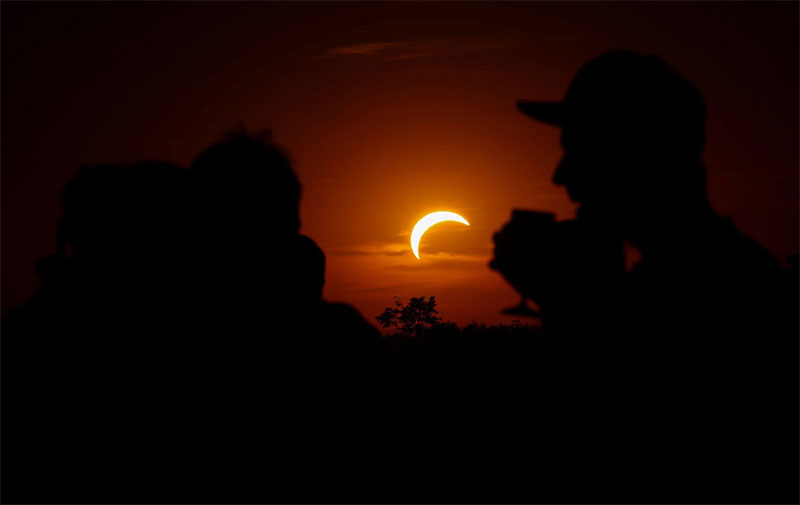
With approximately 90% or more of the Sun covered in many UK locations, the remaining visible portion appeared as a bright crescent.
It is important to remember that this was not a total eclipse in Britain. Even a very thin crescent of uncovered Sun remains extremely bright, which is why proper solar viewing protection was essential. (rmg.co.uk)
Did the Sky Become Completely Dark?
No.
One of the biggest differences between the UK experience and a total solar eclipse was the absence of complete darkness.
At maximum eclipse, the UK did experience a noticeable change in daylight levels. The Royal Observatory Greenwich described the effect as more similar to a cloudy day or the light around dusk or dawn, rather than the darkness of totality. (rmg.co.uk)
The change in light could be particularly noticeable because such a large percentage of the Sun was obscured.
What Time Did the Solar Eclipse 2026 Happen?
The exact timing varied according to location.
In London, the eclipse began at approximately 6:17pm BST, reached maximum at around 7:12–7:13pm, and ended at approximately 8:06pm. (rmg.co.uk)
Some other UK locations experienced slightly different timings:
| Location | Start | Maximum | End |
|---|---|---|---|
| Edinburgh & Glasgow | 6:08pm | 7:05pm | 8:00pm |
| Manchester & Liverpool | 6:13pm | 7:10pm | 8:03–8:04pm |
| Birmingham | 6:15pm | 7:11pm | 8:04pm |
| London, Bristol & Cardiff | 6:17pm | 7:12pm | 8:06–8:07pm |
| Truro, Cornwall | 6:18pm | 7:16pm | 8:10pm |
These timings demonstrate how the event changed slightly from one part of the UK to another. (rmg.co.uk)
How Much of the Sun Was Covered?
The amount of solar coverage depended strongly on location.
Across the UK and Ireland, approximately 90% to 96% of the Sun was covered at maximum eclipse. (rmg.co.uk)
Examples include:
- London: around 90%
- Bristol: around 93%
- Cardiff: around 93%
- Pembrokeshire: around 94%
- Cornwall: around 95%
Generally, the further south-west observers were, the greater the level of coverage.
Timeanddate’s more precise calculations put London’s maximum obscuration at about 91.38%, illustrating why figures may differ slightly depending on rounding and source. (timeanddate.com)
What Could You See at Maximum Eclipse?
At maximum eclipse, viewers in many parts of the UK could see a striking crescent-shaped Sun.
The remaining bright section was much smaller than the normal solar disc, creating a very different appearance from an ordinary day.
However, because the eclipse was partial, viewers could not see the solar corona surrounding the Moon. The famous glowing corona is normally associated with totality, when the bright surface of the Sun is completely hidden.
Instead, the UK saw the bright remaining portion of the Sun shining around the edge of the Moon.
Where Was the Best View?
The best viewing conditions were not necessarily determined by city or population.
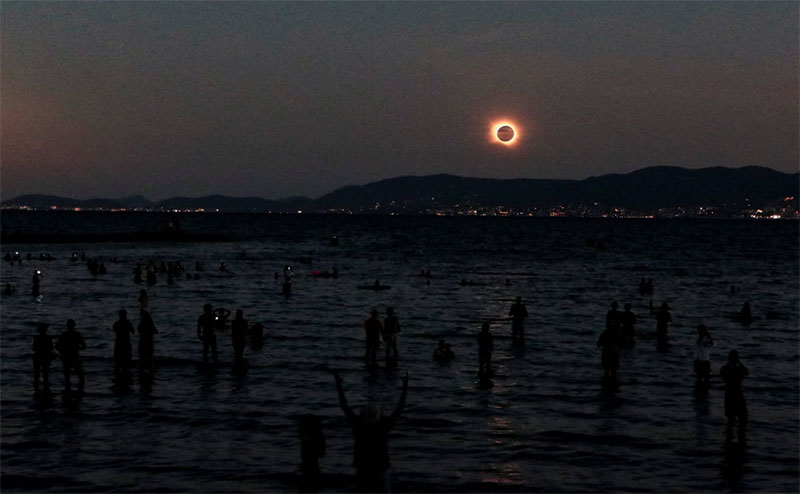
Because the eclipse happened close to sunset, a clear western horizon was one of the most important factors.
The Royal Observatory Greenwich recommended finding a high location with an unobstructed view towards the west, because the Sun and Moon became increasingly low in the sky as the eclipse progressed. (rmg.co.uk)
That meant trees, buildings and hills could easily block the final stages of the event.
Why Did the Eclipse Look Different in Different Places?
A solar eclipse does not appear identical from every location.
People in London, Cardiff, Birmingham, Manchester and Cornwall all saw the same astronomical event, but the Moon covered slightly different portions of the Sun.
This happens because observers in different parts of the Earth are looking at the Sun and Moon from slightly different angles.
As a result, the timing, percentage of coverage and position of the eclipsed Sun in the sky all varied.
This is also why eclipse maps are useful when comparing different viewing locations.
What Did Solar Eclipse 2026 Look Like in London?
London experienced a particularly deep partial eclipse.
The Moon first began covering the Sun at approximately 6:17pm, with maximum eclipse occurring around 7:13pm. At maximum, roughly 91% of the Sun was obscured according to Timeanddate’s location-specific calculation. The eclipse ended at about 8:06pm. (timeanddate.com)
Because the Sun was low in the western sky, London’s skyline and surrounding buildings could make visibility challenging from some locations.
An open area with a clear western view provided a much better opportunity to follow the eclipse.
What Did Solar Eclipse 2026 Look Like in Cornwall?
Cornwall experienced some of the highest solar coverage in the UK.
The Royal Observatory Greenwich reported approximately 95% coverage in Cornwall. The maximum occurred around 7:16pm, with the eclipse continuing until approximately 8:10pm in Truro. (rmg.co.uk)
This made Cornwall one of the most attractive destinations for people hoping to see the deepest possible partial eclipse from Britain.
Could You See the Eclipse Without Special Equipment?
The eclipse itself was visible in the sky, but you should never look directly at the Sun without suitable protection.
Ordinary sunglasses do not provide adequate protection for direct solar viewing.
It is also unsafe to look at the Sun through:
- Unfiltered binoculars
- Unfiltered telescopes
- Camera optical viewfinders
- Other magnifying optical equipment without a proper solar filter
Solar viewing should be done using properly certified eclipse glasses or suitable solar viewing equipment.
The danger remains even when most of the Sun is covered, because the exposed portion is still capable of causing serious eye injury. (rmg.co.uk)
Could You Photograph Solar Eclipse 2026?
Yes, and the event provided excellent opportunities for photography.
Because the Sun was low in the western sky, photographers could include landscapes, buildings, trees and city skylines alongside the eclipsed Sun.
However, photographing the Sun also requires appropriate solar protection.
A suitable solar filter should be used with cameras and optical equipment designed for direct solar photography. Never look through an unfiltered camera viewfinder at the Sun.
What Happened to the Temperature and Light?
The high level of solar coverage caused a noticeable change in the amount of daylight.
When around 90% or more of the Sun was covered, some people could notice the surroundings becoming dimmer and the temperature feeling slightly different.
However, because the UK experienced a partial eclipse rather than totality, the changes were much less dramatic than those experienced inside the path of a total solar eclipse.
The event therefore created an unusual near-dusk atmosphere without complete darkness. (rmg.co.uk)
Was Solar Eclipse 2026 a Total Eclipse?
Globally, the 12 August 2026 event was a total solar eclipse.
But the UK was outside the path of totality.
Totality was visible in parts of Greenland, Iceland and northern Spain, while Britain saw only the partial phase. (rmg.co.uk)
This distinction explains why photographs from Iceland or Spain may look dramatically different from images taken in London or Cornwall.
Why Was Solar Eclipse 2026 So Special?
The eclipse was particularly significant because it produced the highest level of solar coverage visible from the UK and Ireland since 1999.
The Royal Observatory Greenwich described the event as the closest the British Isles had come to totality in almost 27 years. (rmg.co.uk)
For many people, it was the most impressive solar eclipse they had ever seen from Britain.
The combination of extremely high coverage, an evening setting and the low Sun made the event visually unusual.
What Could You See After the Eclipse?
After maximum eclipse, the Moon gradually moved away from the Sun.
The bright crescent slowly became larger again as more of the Sun’s surface was revealed.
By the time the eclipse ended, the Sun had returned to its normal appearance, although in many areas it was already close to the western horizon.
The complete event therefore had a clear beginning, dramatic maximum and gradual ending rather than one sudden change.
Solar Eclipse 2026: What Will You See? — Frequently Asked Questions
What did Solar Eclipse 2026 look like from the UK?
It appeared as a deep partial solar eclipse, with the Moon covering approximately 90–96% of the Sun depending on location. At maximum, the Sun appeared as a narrow bright crescent in many areas. (rmg.co.uk)
Did the UK experience total darkness?
No. The eclipse was partial in the UK, so the sky did not become completely dark.
What time was the maximum eclipse in London?
Maximum eclipse occurred at approximately 7:12–7:13pm BST in London. (rmg.co.uk)
How much of the Sun was covered in the UK?
Approximately 90–96%, depending on the viewing location. (rmg.co.uk)
Where was the greatest coverage in the UK?
The greatest coverage was generally in the south-west, with Cornwall seeing roughly 95%. (rmg.co.uk)
Could you see the solar eclipse with normal sunglasses?
No. Ordinary sunglasses are not suitable for direct solar viewing.
When is the next solar eclipse visible from the UK?
The next significant partial solar eclipse visible from the UK is on 2 August 2027, with around 45% of the Sun covered at maximum from London. The next total solar eclipse visible in the UK is not expected until 2090. (rmg.co.uk)
Solar Eclipse 2026 gave people across Britain an extraordinary view of the Moon passing across the Sun.
Although the UK did not experience totality, the eclipse was deep enough for 90–96% of the Sun to be covered in different locations. The result was a striking crescent Sun, unusual daylight and an atmosphere that felt very different from an ordinary summer evening. (rmg.co.uk)
From London to Cornwall, the experience varied according to location, weather and the quality of the western horizon.
For astronomy enthusiasts, families and casual skywatchers alike, the 12 August 2026 eclipse showed just how remarkable the relationship between the Sun, Moon and Earth can be.
Eclipse 2026 UK: Date, Time, Map, Visibility & What Happened
More Eclipse & Astronomy Guides
- Eclipse 2026 UK: Everything You Need to Know
- Eclipse 2026 UK Time: Exact Timings by Location
- Eclipse 2026 London: Where and When to Watch
- Eclipse 2026 Map: UK Visibility Guide
- Solar Eclipse 2026: What Will You See?
- How to Watch Eclipse 2026 Safely: Eye Protection Guide
- Eclipse 2026 Weather: What UK Viewers Should Know
- Best Places to Watch Eclipse 2026 in the UK
- Eclipse 2026 Photography Guide: How to Photograph a Solar Eclipse
- What Is the Next Solar Eclipse After 2026? UK Dates & Times
Suggested
- Royal Observatory Greenwich
- Timeanddate Eclipse Information
- https://www.nasa.gov/
- European solar eclipses
- 2026 Total Solar Eclipse
writer -anne musrak