
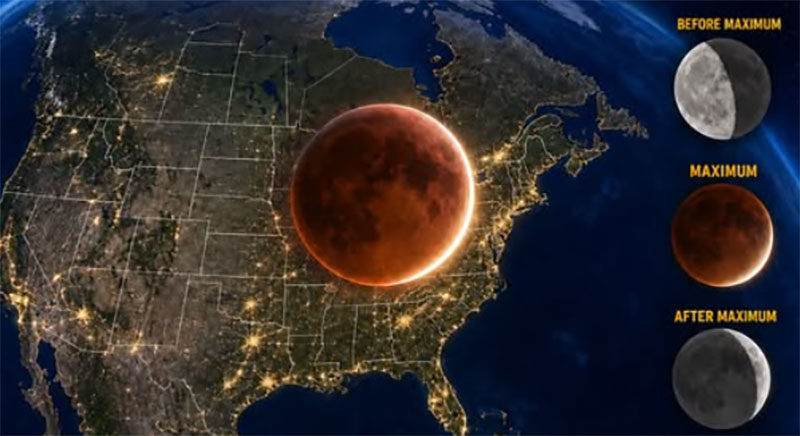
Weather was one of the biggest factors affecting the viewing experience of the Eclipse 2026 in the United Kingdom.
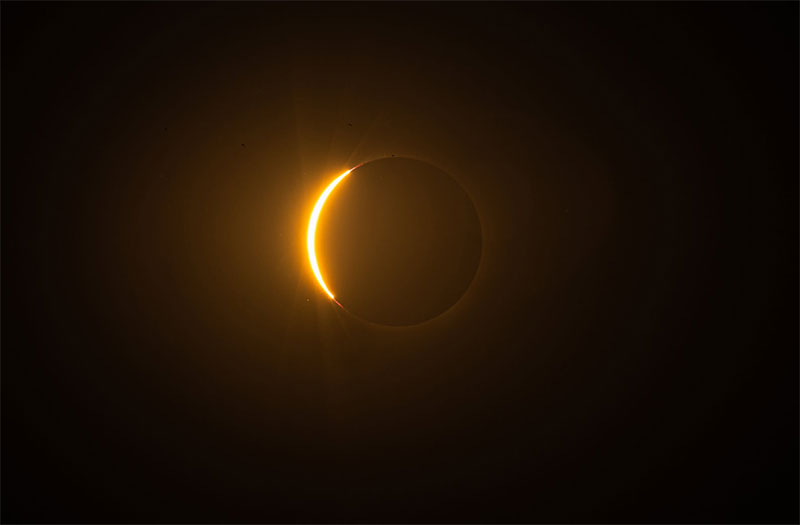
The partial solar eclipse took place on Wednesday, 12 August 2026, during the evening. Although the astronomical conditions were the same across the country, the quality of the view depended heavily on cloud cover, visibility and the local position of the Sun.
According to the UK Met Office, much of England and Wales had favourable viewing conditions, with central, southern and eastern areas generally expected to have clearer skies. Northern England, Scotland and Northern Ireland faced more cloud and therefore more challenging conditions.
This guide explains the Eclipse 2026 UK weather, where viewing conditions were best, how clouds affected visibility, and why checking the weather is always an important part of planning for a solar eclipse.
Why Did Weather Matter So Much During Eclipse 2026?
A solar eclipse can be calculated years in advance, but the weather cannot be controlled.
Even when an eclipse passes directly over a location, thick cloud can completely hide the Sun. A perfectly clear forecast, on the other hand, can provide an excellent opportunity to see the Moon gradually moving across the Sun.
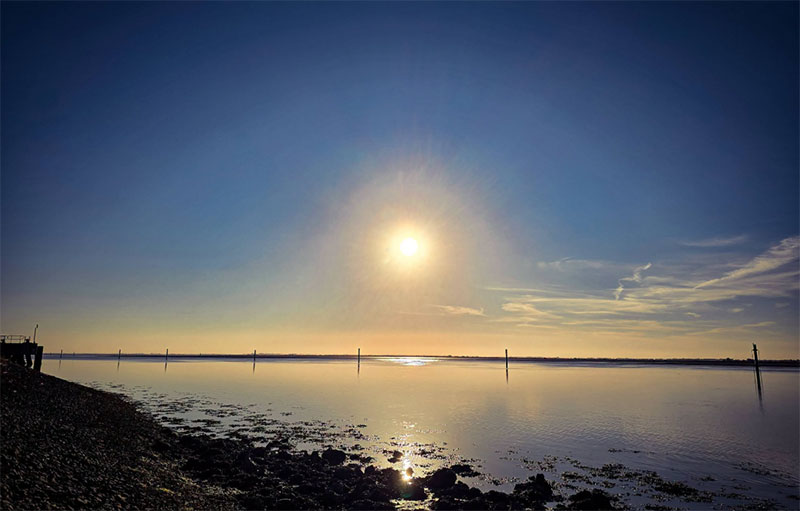
For the Eclipse 2026 UK, this difference was particularly important because the eclipse occurred in the evening and the Sun was relatively low in the western sky.
That meant viewers needed both:
- Clear or mostly clear skies
- A good view towards the western horizon
The Met Office highlighted cloud cover as one of the major factors affecting eclipse visibility across the UK.
Where Was the Best Eclipse 2026 Weather in the UK?
Before the eclipse, the Met Office forecast the best viewing conditions across central, southern and eastern England and Wales.
Many of these areas were expected to have largely clear skies during the evening, providing good opportunities to see the eclipse.
The West Midlands had some potential for cloud, although many viewers were still expected to get at least some breaks in the cloud.
Further north, conditions were more difficult. More cloud was expected across northern England and Scotland, while Northern Ireland was forecast to have some of the poorest viewing conditions because of extensive cloud.
General UK Eclipse Weather Outlook
| Region | General Viewing Conditions |
|---|---|
| Southern England | Generally favourable |
| Central England | Generally favourable |
| Eastern England | Generally favourable |
| Wales | Generally favourable in many areas |
| West Midlands | Some cloud possible |
| Northern England | More cloud likely |
| Scotland | More challenging conditions |
| Northern Ireland | Cloudier and poorer prospects |
These were weather forecasts issued around the event rather than guarantees for every individual location. Local conditions could vary considerably.
Eclipse 2026 Weather in London
London was among the locations with relatively favourable prospects for viewing the eclipse.
The wider weather pattern across southern England was generally dry and settled during the period around the event, providing better opportunities for clear skies than many northern and western areas.
However, even in London, local cloud, haze or buildings could affect the view.
Because the eclipse was visible low in the western sky, viewers needed an unobstructed horizon as well as suitable weather.
Eclipse 2026 Weather in Cornwall
Cornwall was an especially interesting location because it experienced some of the highest eclipse coverage in the UK, at around 95%.
The weather therefore mattered greatly for viewers hoping to see the deepest partial eclipse possible from Britain.
A high percentage of solar coverage does not automatically mean a good viewing experience. If cloud covers the Sun at maximum eclipse, the high level of coverage becomes much harder to appreciate.
For this reason, eclipse watchers in Cornwall needed to consider both eclipse magnitude and local weather conditions.
Eclipse 2026 Weather in Scotland
Scotland faced more challenging viewing prospects than much of southern England and Wales.
The Met Office forecast increased cloud cover across northern areas, with northern Scotland among the regions where the eclipse could be more difficult to observe.
However, cloudy conditions do not necessarily mean that nobody saw the eclipse.
Temporary breaks in the cloud can sometimes provide brief opportunities to see the Sun, especially during a long partial eclipse.
Eclipse 2026 Weather in Northern Ireland
Northern Ireland had some of the least favourable viewing prospects in the UK.
The Met Office expected extensive cloud across much of Northern Ireland, making it harder for observers to see the eclipse clearly.
This is a good example of why astronomical visibility and weather visibility are two different things.
An eclipse can be perfectly visible mathematically from a location, while the actual view from the ground may still be blocked by cloud.
How Did Cloud Cover Affect Eclipse Viewing?
Cloud cover can affect an eclipse in several ways.
Thin cloud may still allow the Sun to appear occasionally, but the image can become faint or blurred.
Thick cloud can completely hide the Sun.
Broken cloud can sometimes provide short but valuable viewing opportunities when gaps pass across the sky.
During Eclipse 2026, observers in cloudier parts of the UK therefore benefited from watching the sky rather than giving up immediately.
A break lasting only a few minutes could have been enough to see an important stage of the eclipse.
What About Rain?
Rain was another potential problem for eclipse watchers.
Rain clouds are generally thick enough to prevent direct observation of the Sun, and wet conditions can also make outdoor viewing less comfortable.
Fortunately, the weather pattern around the eclipse was largely settled across much of England and Wales. The Met Office described much of those areas as dry and sunny, while more cloud and occasional rain were more likely in northern and western areas.
Did Heat Affect Eclipse 2026 Viewing?
Yes, the weather story surrounding the eclipse was not only about cloud.
The UK was experiencing a significant spell of hot weather at the time. The Met Office reported temperatures reaching the low to mid-30s Celsius in parts of central England and Wales, with even higher temperatures expected later in the week.
For people standing outside waiting for the eclipse, heat and strong sunshine were therefore additional factors to consider.
Viewers should have taken sensible precautions, including drinking enough water, seeking shade where possible before the event and avoiding unnecessary exposure during the hottest parts of the day.
Importantly, heat does not make direct solar viewing safe. Proper solar eye protection remains essential.
Why Was the Western Horizon So Important?
Weather was only half of the viewing equation.
The eclipse occurred during the evening, with the Sun becoming increasingly low in the sky as the event progressed.
A location with thick cloud but a clear horizon would still have poor viewing conditions. Likewise, a perfectly clear sky would not help if tall buildings, trees or hills blocked the Sun.
The Royal Observatory Greenwich recommended finding a high location with a clear western horizon for the best possible view.
For photographers, this was particularly useful because the low Sun could be combined with landscapes, buildings and skylines.
What Was the Best Weather for Eclipse Viewing?
The ideal conditions were:
Clear skies:
The best possible situation for seeing the eclipse directly.
Light cloud with large breaks:
Potentially useful because the Sun could appear between clouds.
Low haze:
Important because the Sun was low towards the horizon.
Good visibility:
A clear atmosphere helped produce a sharper view.
Dry conditions:
More comfortable for outdoor viewing and photography.
However, no forecast can guarantee perfect conditions for a particular garden, park or viewpoint.
What Should Eclipse Viewers Have Checked Beforehand?
Before travelling to watch a solar eclipse, it is sensible to check:
Local cloud cover
Look at the forecast for the precise viewing location rather than relying only on the general UK forecast.
Visibility
A clear sky can still contain haze or mist that makes the low Sun difficult to see.
Wind
Strong winds can make outdoor photography and the use of equipment more difficult.
Rain
Even a short spell of rain around maximum eclipse can spoil the viewing opportunity.
Weather warnings
Always check official warnings before travelling.
The Met Office specifically encouraged people to keep up to date with the latest weather forecasts and warnings around the eclipse.
Could You Still See Eclipse 2026 Through Cloud?
Sometimes, yes, but it depended on the thickness of the cloud.
A thin or broken cloud layer could occasionally allow the eclipsed Sun to become visible.
Thick, continuous cloud could completely hide it.
This is why people in areas with uncertain forecasts sometimes watched continuously during the eclipse period. A brief clearing could reveal the Sun for a short time.
However, never look directly through thin cloud at the Sun without proper solar protection. Cloud does not make direct solar viewing safe.
Eclipse 2026 Weather and Photography
Weather was particularly important for eclipse photographers.
Photographers wanted:
- Clear skies
- Low haze
- Stable conditions
- An unobstructed horizon
- Enough visibility to see the Sun clearly
The relatively low position of the Sun created opportunities for dramatic photographs featuring the London skyline, countryside, coastline and other foreground elements.
But any camera or telephoto lens pointed directly at the Sun still required appropriate solar filtration.
Did Weather Change the Experience of the Eclipse?
Absolutely.
Two people could experience the same astronomical event very differently simply because of their local weather.
Someone in southern England with a clear sky could see the Moon progressively cover the Sun and reach maximum eclipse.
Someone only a few hundred kilometres away could have much thicker cloud and see very little.
That is one reason why Eclipse 2026 Weather became an important part of the event itself.
The astronomical calculations determined what should happen. The weather determined how much people could actually see.
Eclipse 2026 Weather: Frequently Asked Questions
What was the weather like for Eclipse 2026 in the UK?
Weather conditions varied across the country. Much of England and Wales had favourable prospects, while northern England, Scotland and Northern Ireland faced more cloud and more difficult viewing conditions.
Where had the best Eclipse 2026 weather?
The Met Office identified central, southern and eastern England and Wales as having some of the best chances of clear skies.
Was London good for viewing Eclipse 2026?
London and much of southern England had generally favourable weather prospects, although local cloud and visibility still mattered.
Was Scotland cloudy during Eclipse 2026?
Forecasts indicated more cloud across northern Scotland, making viewing conditions more challenging than in many southern areas.
Was Northern Ireland able to see Eclipse 2026?
The eclipse was astronomically visible from Northern Ireland, but cloud cover was expected to make viewing more difficult.
Did rain affect the Eclipse 2026?
Rain and cloud affected viewing opportunities in some northern and western areas, while much of England and Wales remained relatively dry around the event.
Does cloud make it safe to look at the Sun?
No. Cloud does not provide adequate protection. Proper certified solar viewing equipment should always be used when looking directly at the Sun.
The Eclipse 2026 Weather was almost as important to viewers as the eclipse itself.
While the Moon’s movement across the Sun could be predicted precisely, the actual viewing experience depended on the sky above each location. Much of England and Wales had promising conditions, while northern England, Scotland and Northern Ireland faced greater cloud-related challenges.
The event was also accompanied by unusually hot summer weather, making hydration, shade and sensible outdoor planning important for viewers.
The main lesson from Eclipse 2026 is simple: check the local forecast, choose a location with a clear western horizon, and always use proper solar eye protection.
For future eclipses, combining accurate astronomical timings with reliable local weather forecasts can make a major difference between hearing about an eclipse and actually seeing it.
Eclipse 2026 UK: Date, Time, Map, Visibility & What Happened
More Eclipse & Astronomy Guides
- Eclipse 2026 UK: Everything You Need to Know
- Eclipse 2026 UK Time: Exact Timings by Location
- Eclipse 2026 London: Where and When to Watch
- Eclipse 2026 Map: UK Visibility Guide
- Solar Eclipse 2026: What Will You See?
- How to Watch Eclipse 2026 Safely: Eye Protection Guide
- Eclipse 2026 Weather: What UK Viewers Should Know
- Best Places to Watch Eclipse 2026 in the UK
- Eclipse 2026 Photography Guide: How to Photograph a Solar Eclipse
- What Is the Next Solar Eclipse After 2026? UK Dates & Times
Suggested
- Royal Observatory Greenwich
- Timeanddate Eclipse Information
- https://www.nasa.gov/
- European solar eclipses
- 2026 Total Solar Eclipse
writer – jurskia vorony