
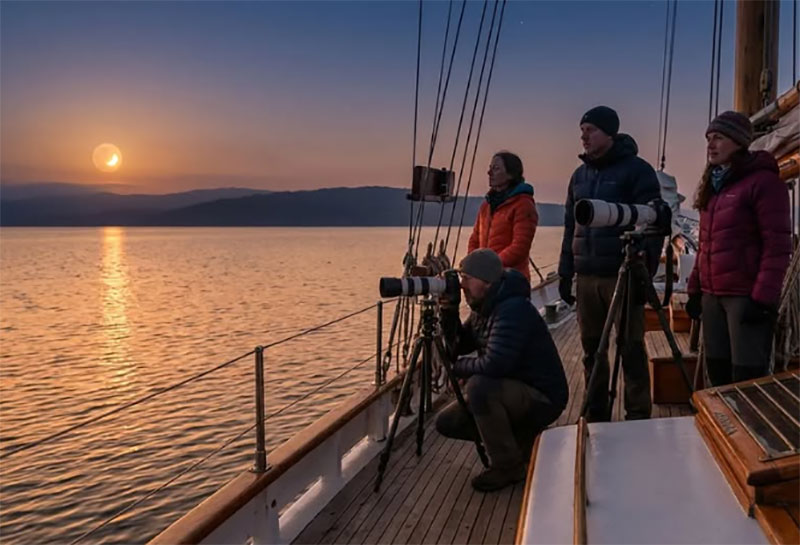
The Eclipse 2026 Photography Guide is for anyone who wants to learn how the spectacular 12 August 2026 solar eclipse could be photographed from the UK.
The event was especially interesting for photographers because the UK experienced a very deep partial solar eclipse, with around 90% of the Sun covered in London and roughly 95% in Cornwall. The eclipse also took place during the evening, with the Sun becoming increasingly low towards the western horizon.
That combination created opportunities for very different types of photographs: close-up images of the eclipsed Sun, wide landscape photographs, city-skyline compositions and images showing the changing light.
This guide explains how to photograph Eclipse 2026, what equipment is useful, how to compose an eclipse photograph and, most importantly, how to protect your eyes and camera equipment.
What Made Eclipse 2026 Interesting for Photography?
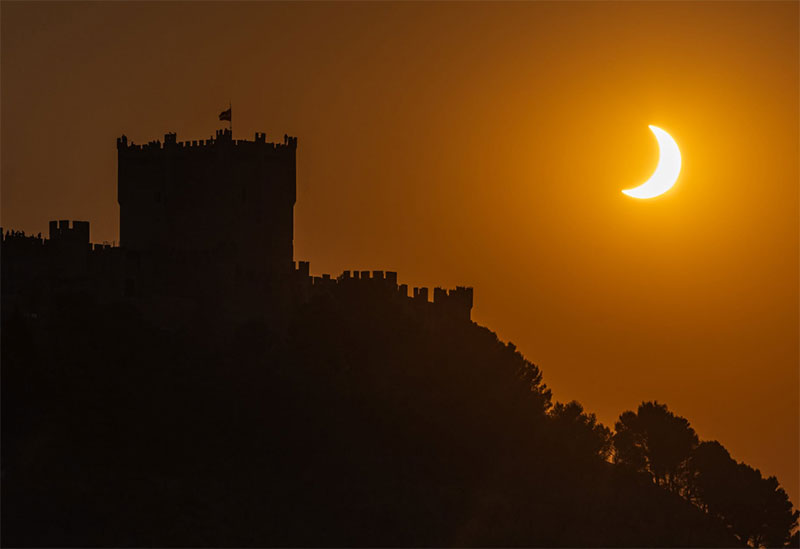
The 12 August 2026 eclipse was not total from the UK, but it was one of the deepest partial solar eclipses visible from Britain in many years.
From London, approximately 90% of the Sun was covered, while Cornwall experienced roughly 95%. The eclipse began at around 6:17pm in London, reached maximum at about 7:12pm, and ended at approximately 8:06pm.
Because the Sun was close to the western horizon, photographers had an unusual opportunity to combine the eclipsed Sun with familiar landscapes, buildings and skylines.
Can You Photograph a Solar Eclipse With a Normal Camera?
Yes, but not by simply pointing an unfiltered camera at the Sun.
A camera lens concentrates sunlight, and direct solar photography without the correct filter can damage the camera equipment and can cause severe eye injury if someone looks through an unfiltered optical viewfinder.
NASA advises that a special-purpose solar filter must be securely attached to the front of the camera lens or other optical equipment when photographing the Sun during the partial phases of an eclipse.
This is the most important rule in any Eclipse 2026 photography setup.
The Most Important Equipment: A Solar Filter
For direct photography of the Sun, use a solar filter specifically designed for solar observation and photography.
The filter should be fitted over the front of the camera lens, not improvised inside the camera system.
Do not use homemade filters, smoked glass, exposed film, CDs, ordinary sunglasses or other unverified materials.
NASA specifically warns that viewing the Sun through cameras, binoculars or telescopes without a proper front-mounted solar filter can cause serious eye injury.
What Camera Equipment Is Useful?
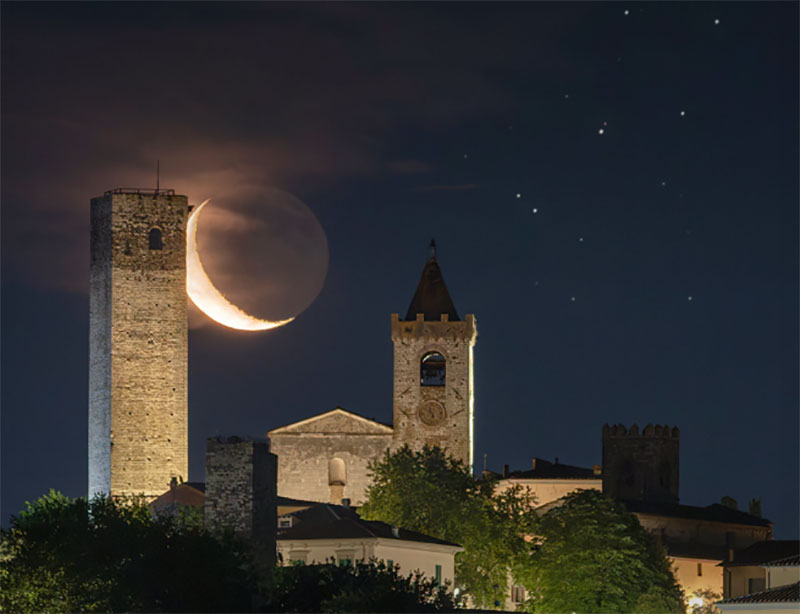
You do not need the most expensive camera to photograph an eclipse.
A useful setup can include:
Camera:
A DSLR or mirrorless camera provides plenty of control, although a capable smartphone can also capture wider landscape compositions.
Telephoto lens:
A long focal length makes the eclipsed Sun appear larger in the frame.
Tripod:
Useful for keeping the camera steady and for carefully composing landscape shots.
Solar filter:
Essential for direct solar photography.
Remote shutter release:
Useful for reducing camera movement when using a tripod.
Spare batteries and memory cards:
Helpful when photographing a sequence over a long period.
Choosing the Right Lens
The ideal focal length depends on the type of photograph you want.
A wide-angle lens is useful for capturing the eclipse as part of a landscape.
A standard lens can show the Sun alongside buildings, trees or people.
A telephoto lens is better for detailed photographs where you want the eclipsed Sun to occupy a larger portion of the frame.
For the 2026 UK eclipse, a telephoto lens was particularly useful because the Sun was relatively low in the evening sky and could be incorporated into a landscape composition.
Photographing the Eclipse With a Telephoto Lens
A long lens can produce the most recognisable close-up eclipse photographs.
The Moon gradually moved across the Sun, changing its appearance throughout the event. At maximum eclipse in London, only a small portion of the Sun remained uncovered.
A telephoto lens allows photographers to capture this changing shape clearly.
However, longer lenses also make camera movement more noticeable, so a stable tripod and careful focusing are valuable.
Photographing the Eclipse as a Landscape
You do not have to photograph the Sun as a close-up.
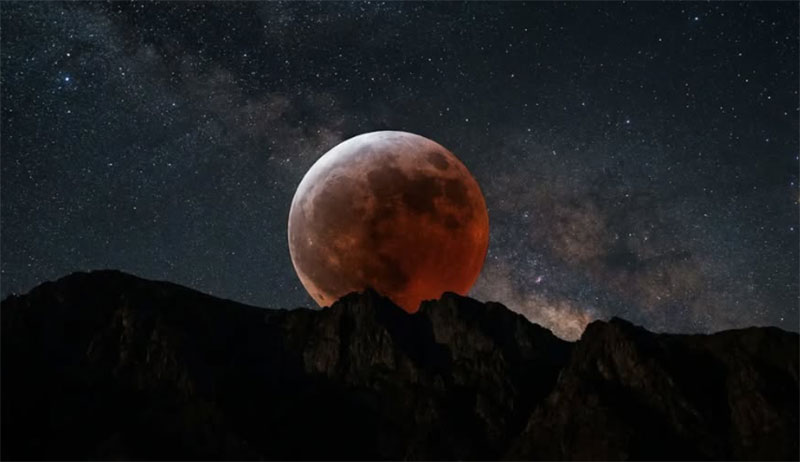
One of the most interesting approaches to Eclipse 2026 photography was to include the surrounding environment.
Because the eclipse happened close to sunset, photographers could frame the eclipsed Sun together with:
- London buildings
- Coastal landscapes
- Trees
- Hills
- Fields
- Historic landmarks
- Sea horizons
This type of photograph can tell more of a story than a close-up of the Sun alone.
Why the Western Horizon Was Important
The eclipse progressed while the Sun was moving lower in the western sky.
The Royal Observatory Greenwich recommended finding a high location with a clear view of the western horizon so observers could follow the event as fully as possible.
For photographers, this was especially important.
A clear western horizon meant more opportunities to include the setting landscape in the composition and reduced the chance that buildings, trees or hills would hide the Sun during the later stages.
Best Camera Settings for Solar Eclipse Photography
There is no single perfect camera setting because cameras, lenses, filters and lighting conditions vary.
However, photographers can generally begin with a low ISO, a relatively fast shutter speed and a suitable aperture, then adjust after checking the exposure.
The most important point is not to copy a particular exposure blindly.
Take test photographs well before maximum eclipse and check the histogram and image detail. Keep the solar filter attached while the Sun is visible.
Because the eclipse was partial in the UK, the Sun remained bright throughout the event.
Should You Use Manual Focus?
Manual focus can be very useful.
Autofocus may struggle when the Sun is small in the frame or when the sky is hazy or partly cloudy.
Before the eclipse reaches maximum, carefully focus on the Sun or a distant object and check the result at high magnification.
Once the focus is correct, switching to manual focus can prevent the camera from repeatedly searching for focus.
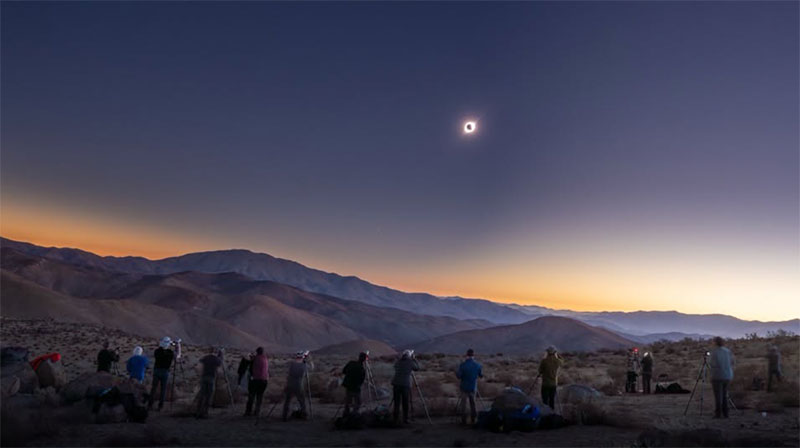
How to Photograph the Changing Shape of the Sun
One of the most creative approaches is to capture a sequence of images.
Rather than taking one photograph, capture the eclipse at regular intervals.
For example, a sequence could show:
Beginning → increasing coverage → maximum eclipse → decreasing coverage → end
These photographs can later be combined into a composite showing the Moon’s progression across the Sun.
This type of image can communicate the entire eclipse far better than a single frame.
Photographing the Eclipse Through Clouds
Clouds can be frustrating, but they can sometimes add atmosphere to an eclipse photograph.
Thin cloud can create a soft or hazy appearance around the Sun, while breaks in the cloud can create dramatic compositions.
However, cloud does not make direct solar photography safe.
The solar filter should remain in place whenever direct sunlight enters the camera lens.
Eclipse Photography From London
London offered photographers a particularly interesting subject because the eclipsed Sun could potentially be combined with the city’s skyline.
At maximum eclipse, around 90–91% of the Sun was obscured from London. Maximum occurred at approximately 7:12–7:13pm BST.
A wide composition could include the London skyline while a telephoto lens could focus on the eclipsed Sun itself.
Because buildings can block a low western Sun, location scouting is important for this type of photography.
Eclipse Photography From Cornwall
Cornwall was one of the strongest locations in the UK for eclipse coverage.
Approximately 95% of the Sun was covered there, and the maximum eclipse from Truro occurred at about 7:16pm, making the region particularly attractive for photographers.
The coastline also offered opportunities to combine the eclipsed Sun with sea, cliffs and open horizons.
For landscape photographers, this combination of high eclipse coverage and dramatic scenery made Cornwall an especially appealing location.
Smartphone Eclipse Photography
A smartphone can be useful for wider photographs, especially when you want to capture the atmosphere rather than a detailed close-up of the Sun.
A smartphone can photograph:
- The changing daylight
- People watching the eclipse
- Shadows created during the eclipse
- Landscape scenes
- The horizon
- A wider scene containing the eclipsed Sun
However, do not point a smartphone camera directly at the Sun for prolonged periods unless appropriate solar protection is being used.
For close-up solar photography, dedicated photographic equipment with a suitable solar filter provides much better control.
Photograph the Shadows
One of the simplest creative ideas during a partial eclipse is to photograph the shadows on the ground.
Tiny gaps between leaves can act as natural pinhole projectors, creating multiple crescent-shaped images of the partially eclipsed Sun. The Royal Observatory Greenwich specifically highlights tree leaves and other simple projection methods as ways to observe the eclipse indirectly.
This can make a beautiful and unusual photograph without needing a telephoto lens.
Photographing People During the Eclipse
Some of the most memorable eclipse photographs are not photographs of the Sun itself.
Try photographing:
- Families watching together
- Astronomers using filtered telescopes
- People wearing eclipse glasses
- Silhouettes against the evening sky
- Children taking part in safe astronomy activities
These photographs capture the human side of the eclipse.
When photographing people, make sure they are viewing the Sun safely and are not looking directly at it.
Can You Photograph the Eclipse Through Binoculars or a Telescope?
Yes, but only when the optical equipment is fitted with a proper solar filter designed for that equipment.
NASA states that solar filters used with telescopes, binoculars and cameras must be attached to the front of the optics. Eclipse glasses should not simply be placed over your eyes while using an unfiltered optical device.
Never improvise a telescope or binocular solar filter.
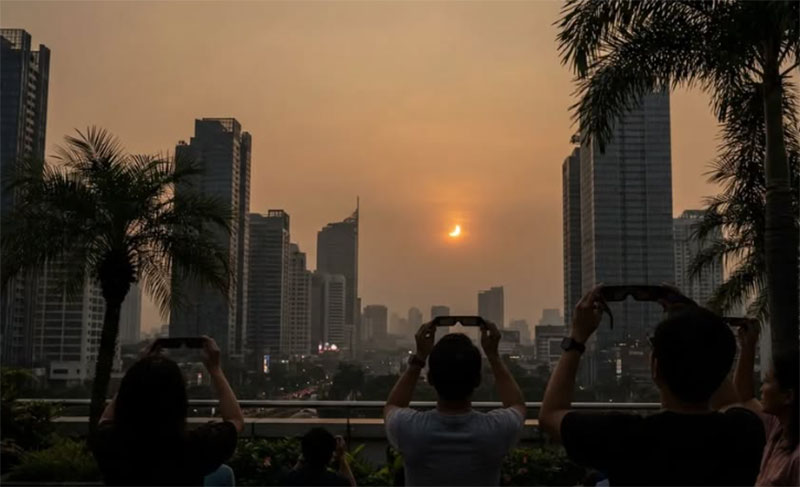
How to Protect Your Eyes While Photographing
Photography can create a dangerous situation because photographers sometimes become focused on the camera settings and forget about eye safety.
Remember:
Never look through an unfiltered optical viewfinder at the Sun.
Use a suitable solar filter designed for the camera system, or use a camera with a safe viewing arrangement that does not expose your eyes to concentrated sunlight.
NASA specifically warns against viewing the Sun through cameras, binoculars or telescopes without proper solar filters.
Plan Your Eclipse Photography Location in Advance
Good eclipse photographs often depend more on preparation than expensive equipment.
Before the event, identify:
Where the Sun will be:
Check its approximate position at the relevant time.
Which direction you need to face:
For the UK 2026 eclipse, the western horizon was especially important.
Potential obstructions:
Check for buildings, trees, hills and other obstacles.
Weather:
Cloud could completely change the photography opportunity.
Composition:
Think about whether you want a close-up, landscape, skyline or people-focused photograph.
The Royal Observatory Greenwich noted that the 2026 eclipse would become increasingly low on the western horizon as it progressed.
A Simple Eclipse Photography Checklist
Before photographing a solar eclipse, check:
- Solar filter suitable for the camera lens
- Camera battery fully charged
- Spare battery available
- Memory card has enough space
- Tripod ready
- Manual focus tested
- Exposure tested
- Western horizon checked
- Weather forecast checked
- Safe viewing equipment available
Preparation makes the actual eclipse much easier to enjoy.
Common Eclipse Photography Mistakes
Using an Ordinary Camera Without a Solar Filter
This is one of the most serious mistakes. The camera lens can concentrate intense sunlight.
Relying on Regular Sunglasses
Ordinary sunglasses are not solar filters and do not make direct solar photography safe.
Using an Unfiltered Telescope
Never point an unfiltered telescope at the Sun.
Arriving Without Checking the Horizon
A perfect eclipse composition can disappear behind a tree or building.
Forgetting the Weather
Even the best camera cannot photograph an eclipse hidden behind thick cloud.
Using Automatic Settings Without Testing
Automatic exposure can change dramatically as the light level changes. Test your settings beforehand.
What Made Eclipse 2026 Different for Photographers?
The UK 2026 eclipse offered something unusual: a very high level of partial coverage combined with an evening setting.
The Royal Observatory Greenwich reported that the event would be the strongest eclipse visible from the UK and Ireland since 1999, with around 90% coverage from London and roughly 95% in Cornwall.
Because the Sun was relatively low, photographers could create images that combined astronomy with familiar UK scenery.
That made the event suitable for both dedicated astrophotographers and people simply using a camera or phone to document the experience.
What is the best lens for photographing a solar eclipse?
A telephoto lens is useful for close-up photographs of the eclipsed Sun, while a wide-angle lens works better for landscape and skyline compositions.
Do I need a solar filter to photograph a partial eclipse?
Yes. When photographing the Sun directly, use a suitable solar filter specifically designed for the camera lens or optical equipment.
Can I photograph a solar eclipse with my phone?
A smartphone can work well for wider scenes and eclipse-related landscapes, but direct solar photography requires appropriate precautions and protection.
Can I use eclipse glasses over a camera lens?
Eclipse glasses are designed for direct viewing by the eyes, not as camera-lens filters. Camera equipment requires a proper solar filter designed to fit the front of the optics.
Can I photograph the eclipse through a telescope?
Yes, but only when the telescope is equipped with an appropriate solar filter securely mounted at the front of the optical system.
What direction should I face for Eclipse 2026 photography in the UK?
The eclipse took place while the Sun was moving towards the western horizon, so a clear western view was particularly useful.
What was the best UK location for eclipse photography?
Cornwall offered some of the highest eclipse coverage, at roughly 95%, while London offered strong opportunities for skyline photography. The best photographic location also depended on weather, horizon visibility and composition.
The Eclipse 2026 Photography Guide is really about combining preparation, creativity and safety.
The 12 August 2026 eclipse gave UK photographers an unusual opportunity to capture a deeply eclipsed Sun against an evening sky. From the coast of Cornwall to the London skyline, there were many ways to tell the story of the event through photography.
The most important piece of equipment was not an expensive camera or powerful lens. It was the correct solar filter.
NASA’s guidance is clear that partial solar eclipses must never be viewed directly without proper solar protection, and cameras, telescopes and binoculars require their own suitable solar filters.
With careful planning, a clear western horizon and the right equipment, eclipse photography can produce photographs that preserve the event long after the Moon has moved away from the Sun.
Eclipse 2026 UK: Date, Time, Map, Visibility & What Happened
More Eclipse & Astronomy Guides
- Eclipse 2026 UK: Everything You Need to Know
- Eclipse 2026 UK Time: Exact Timings by Location
- Eclipse 2026 London: Where and When to Watch
- Eclipse 2026 Map: UK Visibility Guide
- Solar Eclipse 2026: What Will You See?
- How to Watch Eclipse 2026 Safely: Eye Protection Guide
- Eclipse 2026 Weather: What UK Viewers Should Know
- Best Places to Watch Eclipse 2026 in the UK
- Eclipse 2026 Photography Guide: How to Photograph a Solar Eclipse
- What Is the Next Solar Eclipse After 2026? UK Dates & Times
Suggested
- Royal Observatory Greenwich
- Timeanddate Eclipse Information
- https://www.nasa.gov/
- European solar eclipses
- 2026 Total Solar Eclipse
writer – anne musrak