
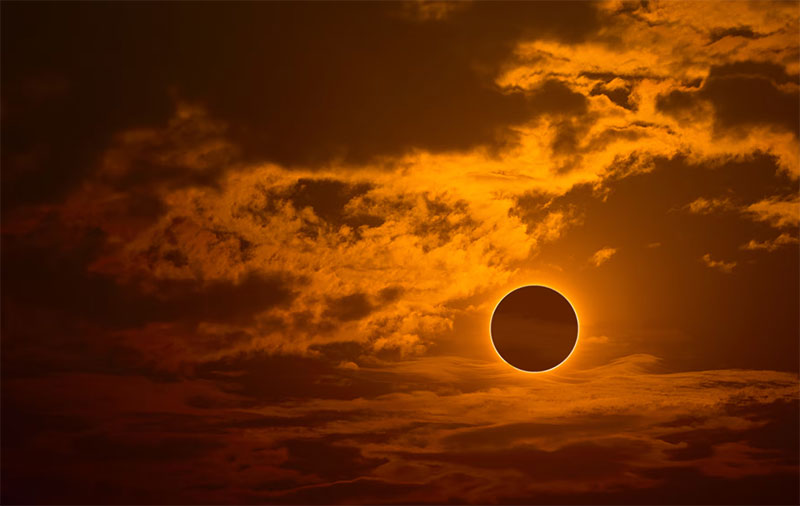
The Eclipse 2026 solar eclipse took place across the UK on Wednesday, 12 August 2026. It was a spectacular partial solar eclipse, with around 90% to 96% of the Sun covered by the Moon depending on location. London reached maximum eclipse at about 7:12pm BST, while parts of Cornwall experienced even greater coverage.
If you have been searching for Eclipse 2026, you are probably wondering when the eclipse will happen, where it can be seen in the UK, what time to look up, and how much of the Sun will be covered.
The year 2026 brings an exciting astronomical event to the UK: a partial solar eclipse on 12 August 2026. Although the UK will not experience totality, many parts of the country will see a significant portion of the Sun covered by the Moon.
For astronomy enthusiasts, photographers, families and anyone simply curious about the night sky, Eclipse 2026 is an event worth putting on the calendar.
What Is Eclipse 2026?
The term Eclipse 2026 is commonly used to describe the major solar eclipse taking place on 12 August 2026.
A solar eclipse happens when the Moon passes between Earth and the Sun. The Moon temporarily blocks some or all of the Sun’s light from reaching certain parts of Earth.
The August 2026 event will be a total solar eclipse along a narrow path of totality, while the UK will experience it as a partial solar eclipse.
This means people across the UK will see the Moon pass across part of the Sun, but the entire solar disc will not disappear.
When Is the Eclipse 2026 in the UK?
The Eclipse 2026 solar event takes place on Wednesday, 12 August 2026.
The exact timing depends on where you are located in the UK. The eclipse will generally occur during the evening, making it particularly interesting for people who want to watch it after work or school.
In many parts of the UK, the eclipse will begin during the early evening, reach its maximum later in the evening, and then finish before sunset.
Because eclipse timings vary from one location to another, viewers should check the local timing for their town or city rather than relying on a single UK-wide time.
Eclipse 2026 UK Time
| UK Location | Eclipse Begins | Maximum Eclipse | Eclipse Ends |
|---|---|---|---|
| Edinburgh & Glasgow | 6:08 pm | 7:05 pm | 8:00 pm |
| Belfast | ~6:10 pm | ~7:08 pm | ~8:05 pm |
| Manchester & Liverpool | 6:13 pm | 7:10 pm | 8:03–8:04 pm |
| Birmingham | 6:15 pm | 7:11 pm | 8:04 pm |
| London | 6:17 pm | 7:12 pm | 8:06 pm |
| Cardiff | 6:17 pm | 7:12 pm | 8:06 pm |
| Cornwall | 6:18 pm | 7:16 pm | 8:10 pm |
One of the most common searches is “Eclipse 2026 UK time.”
For much of the UK, the eclipse will occur roughly between the early evening and around sunset. The maximum eclipse will occur at slightly different times depending on your location.
London, Manchester, Birmingham, Edinburgh, Cardiff and Belfast will not all see exactly the same amount of the Sun covered at exactly the same moment.
That is why location-specific eclipse information is important.
Eclipse 2026 at a Glance
| Information | Details |
|---|---|
| Event | Solar Eclipse |
| Date | 12 August 2026 |
| UK visibility | Partial |
| Day | Wednesday |
| Main viewing period | Evening |
| Visibility | Much of the UK |
| Type in the UK | Partial Solar Eclipse |
Will the UK See a Total Solar Eclipse?
No.
The UK will experience a partial solar eclipse during the August 2026 event.
However, this does not mean the event will be uninteresting. A large part of the Sun will be covered in some locations, creating a noticeable change in the appearance of the Sun.
The amount of coverage depends on your geographical location.
People located closer to the northern parts of the UK may experience a different eclipse magnitude from those farther south.
Eclipse 2026 London
Why Was a Clear Western Horizon Important?
London is one of the most searched locations for Eclipse 2026 UK information.
People in London will be able to see the Moon pass in front of the Sun, creating a substantial partial eclipse.
The exact appearance of the eclipse will depend on the time and local viewing conditions.
If you are watching from London, an unobstructed view toward the Sun will be important. Tall buildings, trees and clouds can make the observation more difficult.
For photographers, open parks, elevated locations and areas with a clear western or north-western horizon may provide better opportunities, depending on the exact position of the Sun at the time.
Eclipse 2026 UK Map
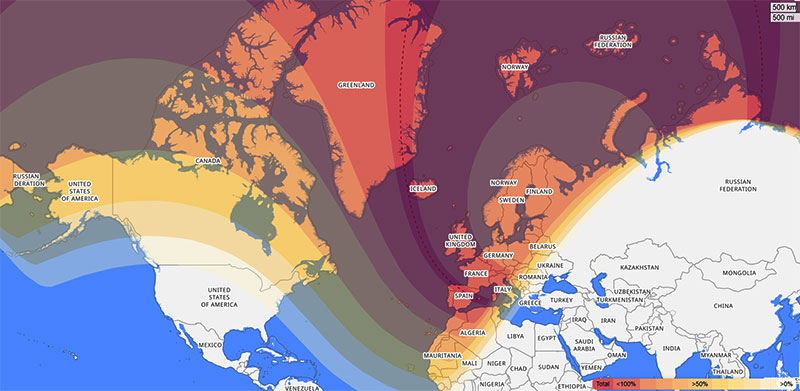
“The eclipse was visible across the UK as a partial solar eclipse, with the greatest coverage generally towards the south-west.”
An Eclipse 2026 map can help viewers understand how much of the Sun will be covered in different parts of the country.
The eclipse will not look identical everywhere.
The further you move across the UK, the position of the Moon relative to the Sun changes. As a result, the percentage of the Sun covered will also change.
For the best experience, check an astronomical eclipse map for your exact location before the event.
How Much of the Sun Was Covered During Eclipse 2026?
The amount of the Sun covered during the Eclipse 2026 solar eclipse varied depending on where you were in the UK. The event was visible as a partial solar eclipse across the country, but some locations experienced significantly greater coverage than others.
Overall, approximately 90% to 96% of the Sun was covered by the Moon in different parts of the UK. This made the eclipse a particularly impressive astronomical event, even though the UK did not experience totality.
How Much of the Sun Was Covered in Different UK Locations?
- London: Around 90% of the Sun was covered.
- Cardiff: Approximately 94% of the Sun was covered.
- Pembrokeshire: Around 94% coverage was expected.
- Cornwall: Approximately 95% of the Sun was covered.
- South-western and western areas: Generally experienced some of the highest levels of eclipse coverage.
- Scotland and northern parts of the UK: Experienced slightly less coverage compared with many areas farther south and west.
The difference in coverage was caused by the Moon’s shadow moving across the Earth. As a result, the eclipse appeared differently from one location to another.
For example, someone watching from London saw around 90% of the Sun covered, while viewers in parts of Cornwall and south-western England saw closer to 95%. This relatively small difference can make a noticeable change in the appearance of the eclipsed Sun.
Why Did Coverage Vary Across the UK?
A solar eclipse does not look exactly the same from every location. The position of the Moon relative to the Sun changes across the eclipse path, which means the percentage of the Sun hidden by the Moon also changes.
Generally, locations farther towards the west and south-west of the UK experienced greater coverage, while parts of Scotland and northern Britain saw somewhat less.
According to the Royal Observatory Greenwich, London experienced around 90% coverage, while parts of Cornwall saw approximately 95%. Pembrokeshire in Wales also experienced around 94% coverage.
This variation made Eclipse 2026 particularly interesting for UK observers, as the experience depended on where they watched from.
Was 90–96% Coverage the Same as a Total Eclipse?
No. Even when 90% or 95% of the Sun is covered, the remaining visible part of the Sun is still extremely bright.
A total solar eclipse occurs only when the Moon completely covers the visible surface of the Sun from a particular location. During the 2026 event, the UK experienced a partial eclipse, so observers needed proper solar viewing protection throughout the event.
For anyone interested in astronomy, the differences in eclipse coverage across the UK provide an excellent example of how the positions and movements of the Sun, Moon and Earth create different viewing experiences from different places.
Where Can You Watch Eclipse 2026 in the UK?
The best place to watch the eclipse is somewhere with:
- A clear view of the sky
- Minimal obstruction from buildings and trees
- Good weather conditions
- A safe viewing position
- A clear view toward the Sun
You do not necessarily need to travel to a famous astronomical location.
A local park, open field, garden or elevated viewpoint can be perfectly suitable if the horizon is unobstructed.
However, remember that weather can make or break an eclipse viewing experience.
Even if your location has excellent eclipse visibility, thick cloud can prevent you from seeing the Sun.
How to Watch Eclipse 2026 Safely
This is one of the most important parts of watching a solar eclipse.
Never look directly at the Sun without proper eye protection.
Ordinary sunglasses are not suitable for viewing a solar eclipse. Looking at the Sun through a camera, telescope or binoculars without the correct solar filter can also cause severe and permanent eye damage.
Use properly certified solar eclipse viewing glasses or another purpose-built solar viewing system.
If you are using optical equipment, make sure the solar filter is designed specifically for that equipment and is installed correctly.
Children should always be supervised when viewing the eclipse.
Can You Take Photos of Eclipse 2026?
Yes, but photography requires the same level of caution as direct viewing.
A normal camera lens can allow intense sunlight into the optical system. Looking through an unfiltered camera, telescope or binoculars can be dangerous to your eyes and may also damage equipment.
Photographers planning to capture Eclipse 2026 should use appropriate solar filters and learn how their equipment behaves when photographing the Sun.
A tripod can also help produce sharper images, especially when using a telephoto lens.
If you are planning to photograph the event, practise your setup before eclipse day rather than trying everything for the first time during the eclipse.
What Will Eclipse 2026 Look Like?
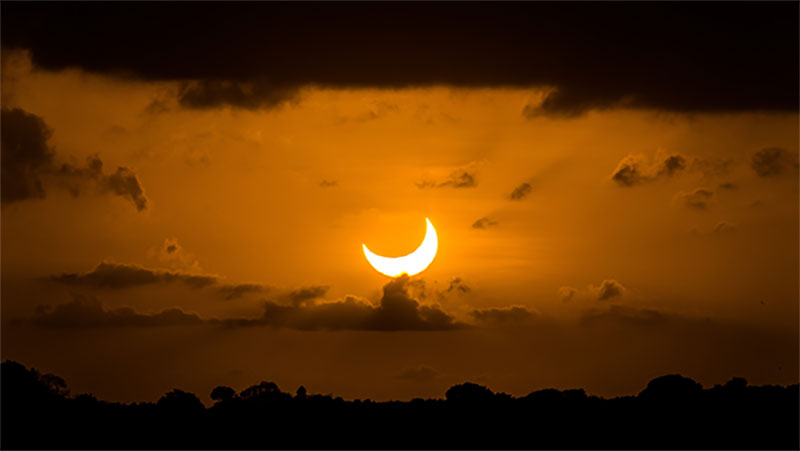
During a partial solar eclipse, the Sun gradually appears to have a dark section missing from its disc.
As the Moon moves across the Sun, the covered portion becomes larger until the eclipse reaches maximum.
After maximum eclipse, the Moon gradually moves away from the Sun’s disc.
Depending on the amount of coverage and the local conditions, daylight may appear slightly different, although the effect will not be the same as experiencing totality.
This gradual progression is part of what makes a solar eclipse fascinating to watch.
Eclipse 2026 and Weather in the UK
Weather is one of the biggest unknowns for eclipse watchers.
August can provide relatively favourable conditions in parts of the UK, but British weather is famously unpredictable.
Cloud cover can change quickly, so checking the forecast in the days leading up to 12 August 2026 is essential.
If your local area is expected to be cloudy, you may consider travelling to a nearby location with a better forecast.
However, always prioritise safe travel and choose a location where you can observe the Sun safely.
Why Is Eclipse 2026 Important?
Solar eclipses are relatively rare events at any particular location.
Even though partial eclipses can occur more frequently, each one provides an opportunity to observe the relationship between the Earth, Moon and Sun.
For children and students, Eclipse 2026 can also be a great introduction to astronomy.
It demonstrates in a very visible way how objects in space move relative to one another.
Schools, science groups, astronomy clubs and families can use the event as an opportunity to learn about the solar system.
What Happened During Eclipse 2026?
The Eclipse 2026 solar eclipse took place across the UK on Wednesday, 12 August 2026, giving millions of people the opportunity to see one of the most impressive partial solar eclipses visible from Britain in decades.
Although the eclipse was partial in the UK, it was unusually close to totality. Depending on the viewing location, the Moon covered approximately 90% to 96% of the Sun. The amount of coverage varied across the country, with locations in the south-west generally experiencing a greater percentage of the Sun covered.
When Did Eclipse 2026 Begin?
The eclipse began during the early evening as the Moon gradually moved across the face of the Sun.
In London, the first contact occurred at approximately 6:17pm BST, when the Moon first began covering the Sun. The exact start time varied slightly depending on location. For example, the eclipse began at around 6:08pm in Edinburgh and Glasgow and around 6:18pm in Truro, Cornwall.
When Was the Eclipse at Its Maximum?
The eclipse reached its maximum during the early evening, when the largest portion of the Sun was covered by the Moon.
In London, maximum eclipse occurred at approximately 7:12pm BST, with around 90% of the Sun covered. In Cornwall, the maximum occurred slightly later, at around 7:16pm, with approximately 95% coverage.
Across the UK, the maximum occurred at slightly different times. Edinburgh and Glasgow reached maximum at about 7:05pm, Manchester and Liverpool at around 7:10pm, Birmingham at approximately 7:11pm, and London, Bristol and Cardiff at around 7:12pm.
When Did Eclipse 2026 End?
After reaching maximum, the Moon gradually moved away from the Sun’s disc.
From London, the eclipse ended at approximately 8:06pm BST. In other parts of the UK, the end time varied slightly. The eclipse ended around 8:00pm in Edinburgh and Glasgow and around 8:10pm in Truro, Cornwall.
How Much of the Sun Was Covered?
The amount of solar coverage depended on location.
Across the UK and Ireland, approximately 90% to 96% of the Sun was covered at maximum eclipse. London experienced around 90% coverage, while Cornwall saw roughly 95%, and Pembrokeshire experienced around 94%. Generally, viewers further towards the south-west saw a larger portion of the Sun covered.
This made the 2026 eclipse particularly special for UK observers. It was described by the Royal Observatory Greenwich as the closest the British Isles had come to totality since the 1999 total solar eclipse.
What Did the Eclipse Look Like?
At maximum eclipse, only a relatively small bright section of the Sun remained visible from many UK locations.
Despite the high percentage of coverage, the UK did not experience a total solar eclipse. The sky therefore did not become completely dark. Instead, the changing light levels could make the surroundings feel more like a cloudy day or the period around dusk or dawn.
The eclipse also took place while the Sun was getting lower in the western sky. This meant that viewers needed a clear view towards the western horizon to see as much of the event as possible.
Why Was Eclipse 2026 Significant for the UK?
The 12 August 2026 eclipse was one of the most significant solar eclipses visible from the UK in many years.
With around 90% to 96% of the Sun covered, it came remarkably close to totality without actually becoming total anywhere in the UK. The greatest coverage was generally found towards the south-west, making areas such as Cornwall particularly attractive for eclipse watchers.
The event also marked an important moment for astronomy enthusiasts because the next total solar eclipse visible from the UK is not expected until 2090.
For anyone who witnessed it, Eclipse 2026 was a memorable reminder of how dramatically the Moon, Earth and Sun can align to transform the appearance of the daytime sky.
Eclipse 2026 FAQs
When is Eclipse 2026?
The major solar eclipse occurs on 12 August 2026.
Is Eclipse 2026 visible in the UK?
Yes. The UK will experience the August 2026 event as a partial solar eclipse.
Can I see Eclipse 2026 from London?
Yes. London will experience a partial solar eclipse, although the exact appearance and timing depend on the viewing location.
What time is Eclipse 2026 in the UK?
The eclipse occurs during the evening of 12 August 2026. Exact timings vary by location.
Do I need eclipse glasses?
Yes. Proper solar viewing protection should be used whenever looking directly toward the Sun during a solar eclipse.
Can I use normal sunglasses?
No. Ordinary sunglasses are not designed to protect your eyes from direct solar viewing during an eclipse.
Can I photograph the eclipse?
Yes, but use appropriate solar filtration and follow safe solar photography practices.
Will Eclipse 2026 be a total eclipse in the UK?
No. The UK will experience a partial solar eclipse rather than totality.
What Is the Next Eclipse After Eclipse 2026?
The August 2026 solar eclipse is only one of several interesting astronomical events taking place around this period.
If you enjoy astronomy, it is worth keeping an eye on future solar and lunar eclipses as well.
The visibility of each eclipse depends heavily on location. Some may be visible from the UK, while others may require travel to different parts of the world.
Eclipse 2026 is set to be one of the most interesting astronomical events visible from the UK in 2026.
Although people in the UK will see a partial rather than total solar eclipse, the event offers a rare opportunity to watch the Moon pass directly across the Sun.
Whether you are an experienced astronomy enthusiast or simply curious about the night sky, 12 August 2026 is a date worth remembering.
Before the eclipse, check your local timing, weather forecast and viewing conditions. Most importantly, make sure you have proper solar eye protection.
A few minutes of preparation can turn Eclipse 2026 into an unforgettable experience.
More Eclipse & Astronomy Guides
- Eclipse 2026 UK: Everything You Need to Know
- Eclipse 2026 UK Time: Exact Timings by Location
- Eclipse 2026 London: Where and When to Watch
- Eclipse 2026 Map: UK Visibility Guide
- Solar Eclipse 2026: What Will You See?
- How to Watch Eclipse 2026 Safely: Eye Protection Guide
- Eclipse 2026 Weather: What UK Viewers Should Know
- Best Places to Watch Eclipse 2026 in the UK
- Eclipse 2026 Photography Guide: How to Photograph a Solar Eclipse
- What Is the Next Solar Eclipse After 2026? UK Dates & Times
Suggested
- Royal Observatory Greenwich
- Timeanddate Eclipse Information
- https://www.nasa.gov/
- European solar eclipses
- 2026 Total Solar Eclipse
editor – joge cruch