
After the spectacular Solar Eclipse 2026, many skywatchers are already asking the same question: What is the next solar eclipse after 2026?
The answer depends on where you are in the world.
The next solar eclipse anywhere on Earth will take place on 6 February 2027. It will be an annular solar eclipse, visible mainly from parts of South America, the Atlantic and southern Africa. However, it will not be visible from the United Kingdom. (nasa.gov)
For people in the UK, the next solar eclipse worth watching will be on 2 August 2027, when the UK will experience another partial solar eclipse. London will see roughly 42% of the Sun covered, with the eclipse occurring during the morning. (timeanddate.com)
This guide explains the next solar eclipses after 2026, what UK viewers can expect, when to watch, and when Britain will next see a total solar eclipse.
What Is the Next Solar Eclipse After 2026?
There are two solar eclipses in 2027.
The first will take place on 6 February 2027 and will be an annular solar eclipse.
The second will occur on 2 August 2027 and will be a total solar eclipse globally, although the UK will see only a partial eclipse. NASA’s 2027 eclipse calendar confirms both events. (nasa.gov)
| Date | Solar Eclipse Type | Visible From UK? |
|---|---|---|
| 6 February 2027 | Annular | No |
| 2 August 2027 | Total globally / Partial in UK | Yes |
So, if you are searching specifically for the next solar eclipse visible from the UK after 2026, the key date is 2 August 2027. (timeanddate.com)
The 6 February 2027 Annular Solar Eclipse
The first solar eclipse after 2026 will happen on Saturday, 6 February 2027.
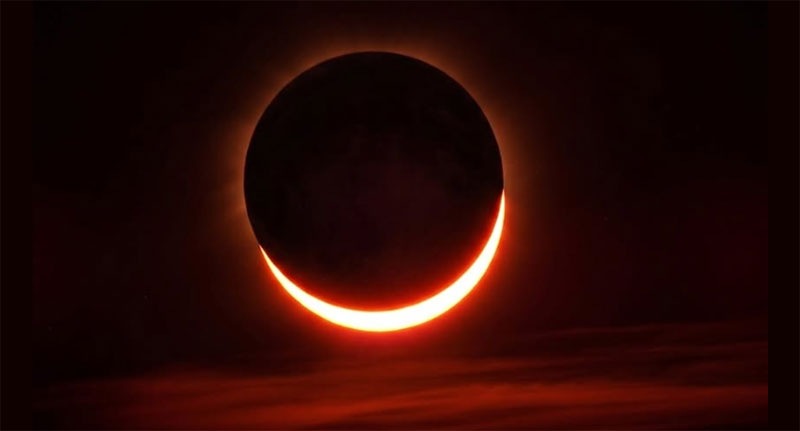
It will be an annular solar eclipse, which occurs when the Moon passes in front of the Sun but appears slightly smaller than the Sun in the sky. As a result, the Moon does not completely cover the Sun. Instead, a bright ring of sunlight remains visible around the Moon.
This famous appearance is often called a “ring of fire.”
NASA lists the February 2027 event as an annular solar eclipse, with the main annular path crossing parts of South America and the Atlantic, while partial phases will be visible across a much larger surrounding region. (nasa.gov)
Can You See the February 2027 Eclipse From the UK?
No.
The 6 February 2027 annular eclipse will not be visible from the United Kingdom. For UK observers, the more important date is the following solar eclipse on 2 August 2027. (nasa.gov)
The Next Solar Eclipse Visible From the UK
The next solar eclipse visible from the UK after 2026 will take place on:
Date: 2 August 2027
Day: Monday
Global type: Total solar eclipse
UK type: Partial solar eclipse
The total eclipse path will pass through parts of southern Spain, North Africa and the Middle East, while much of Europe, including the UK, will see only a partial eclipse. (nasa.gov)
For UK viewers, this means another opportunity to watch the Moon move across the Sun, although it will not be as deep a partial eclipse as the remarkable event seen in August 2026.
Eclipse 2027 UK Time
The 2027 solar eclipse will occur during the morning in the UK, which is quite different from the August 2026 eclipse that happened during the evening.
Across the UK, the partial eclipse will begin at approximately 8:57am BST and finish at around 11:01am BST, with the exact timing depending on location. (timeanddate.com)
London Eclipse 2027 Times
In London, the eclipse will:
- Begin: 9:03am BST
- Reach maximum: 10:00am BST
- End: 10:59am BST
- Maximum coverage: approximately 41.9%
The partial eclipse will last for around 1 hour and 56 minutes in London. (timeanddate.com)
How Much of the Sun Will Be Covered in 2027?
The percentage of the Sun covered will vary across the United Kingdom.
Timeanddate’s location-specific calculations give examples such as:
| Location | Maximum Coverage |
| Southampton | ~44.2% |
| Bristol | ~42.3% |
| Cardiff | ~42.2% |
| London | ~41.9% |
| Birmingham | ~38.7% |
| Liverpool | ~35.6% |
| Manchester | ~35.3% |
| Leeds | ~34.2% |
| Glasgow | ~27.6% |
This means the south of the UK will generally experience a deeper partial eclipse than northern areas. (timeanddate.com)
Compared with the 2026 eclipse, the difference will be noticeable. The August 2026 event covered more than 90% of the Sun in many UK locations, whereas the 2027 eclipse will cover roughly one-quarter to less than half of the Sun depending on location.
What Will the 2027 Eclipse Look Like?
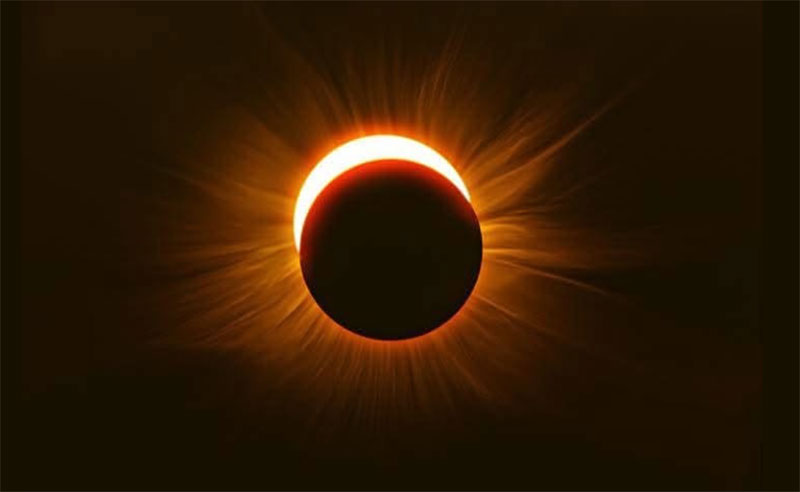
From the UK, the Sun will appear to have a large curved section missing as the Moon passes across it.
At maximum eclipse, London will see roughly 42% of the Sun obscured. That is enough to make the shape of the Sun visibly different, but the sky will not experience the dramatic dimming associated with the 2026 deep partial eclipse.
The event should therefore be thought of as a moderate partial solar eclipse, rather than a near-total experience.
Will the UK See a Total Solar Eclipse in 2027?
No.
Although the global event on 2 August 2027 is a total solar eclipse, the path of totality does not cross the UK.
Observers inside the path of totality in places such as southern Spain, parts of North Africa and the Middle East will experience the Moon completely covering the Sun. UK observers will see only the partial phase. (nasa.gov)
This distinction is important because a total eclipse is dramatically different from a partial one.
Where Will the 2027 Total Solar Eclipse Be Visible?
The narrow path of totality for the 2 August 2027 eclipse will cross several regions.
NASA identifies southern Spain, Morocco, Algeria, Tunisia, Libya, Egypt, Saudi Arabia and Yemen among the areas where totality will be visible. (nasa.gov)
For travellers interested in seeing the full total eclipse, choosing a location inside the path of totality will be essential.
That is very different from watching the event from the UK, where only the partial phase will be visible.
Is the 2027 Eclipse Worth Watching From the UK?
Absolutely.
Although the 2027 UK eclipse will be less dramatic than the 2026 event, it will still be an interesting astronomical event.
It offers several advantages:
Morning viewing: The eclipse takes place during the morning, making it easier for many people to plan around.
Wide UK visibility: The partial eclipse will be visible throughout much of the United Kingdom.
Easy observation: You do not need to travel abroad to experience the event.
Educational value: It provides another opportunity for schools, families and astronomy groups to observe the motion of the Moon across the Sun.
How Does the 2027 Eclipse Compare With Eclipse 2026?
The contrast between the two events is particularly interesting.
| Feature | 12 Aug 2026 | 2 Aug 2027 |
| UK eclipse type | Partial | Partial |
| London maximum | ~90–91% | ~42% |
| London timing | Evening | Morning |
| UK totality | No | No |
| Global eclipse type | Total | Total |
| Main UK experience | Very deep partial | Moderate partial |
The 2026 eclipse was much deeper in the UK. In London, around 90–91% of the Sun was covered, compared with about 42% in 2027. (timeanddate.com)
This makes the 2027 event interesting, but it should not be expected to look the same as the spectacular 2026 eclipse.
What About the Next Total Solar Eclipse Visible From the UK?
This is one of the most important questions for UK astronomy fans.
The next total solar eclipse visible from the United Kingdom is currently expected in 2090.
That means people in Britain who want to experience totality without travelling abroad face a very long wait.
For many modern viewers, this makes the deep partial eclipse of 2026 and the partial eclipse of 2027 especially valuable opportunities to observe solar eclipses from the UK.
Why Are Total Solar Eclipses So Rare in One Location?
Solar eclipses themselves are not extremely rare globally, but totality is only visible inside a relatively narrow path.
NASA explains that the Moon’s umbral shadow — the part that produces totality — covers only a limited area of Earth’s surface. People outside that region experience a partial eclipse instead. (nasa.gov)
This is why two people in different countries can experience the same eclipse very differently.
A person standing inside the path of totality can see the Moon completely cover the Sun, while someone a few hundred kilometres away may see only part of the Sun covered.
How to Watch the 2027 Solar Eclipse Safely
The same eye-safety rules apply in 2027 as they did during Eclipse 2026.
Because the UK will experience a partial eclipse, never look directly at the Sun without proper solar viewing protection.
Ordinary sunglasses are not sufficient.
For direct solar viewing, use properly certified solar eclipse glasses or suitable solar viewing equipment. Telescopes, binoculars and cameras also require appropriate solar filters designed for the equipment.
This is especially important because even when only part of the Sun is visible, the remaining sunlight can still cause permanent eye damage.
Best Places to Watch the 2027 Eclipse in the UK
The exact best location will depend on local weather, horizon visibility and how much of the Sun is covered.
However, the southern parts of the UK will generally see a deeper eclipse than northern areas.
Timeanddate’s calculations show maximum coverage of around:
- 44% in Southampton
- 42% in Bristol and Cardiff
- 42% in London
- 39% in Birmingham
- 35% in Manchester and Liverpool
- 28% in Glasgow
These figures make southern England and South Wales particularly attractive for observers who want the greatest UK coverage. (timeanddate.com)
Why Location Still Matters in 2027
As with the 2026 eclipse, your location will affect several things:
- The exact start time
- Maximum eclipse time
- Maximum percentage of the Sun covered
- End time
- Position of the Sun in the sky
A difference of several percentage points may not sound large, but it can noticeably change the appearance of the eclipsed Sun.
For this reason, checking a location-specific eclipse map before the event will be useful.
Future Solar Eclipses After 2027
The 2027 events are not the end of the story.
NASA’s eclipse predictions show further solar eclipses in:
26 January 2028 — Annular solar eclipse
22 July 2028 — Total solar eclipse
1 June 2030 — Annular solar eclipse
25 November 2030 — Total solar eclipse
The exact visibility from the UK will vary for each event. (nasa.gov)
This gives astronomy enthusiasts plenty of future events to follow, although not all will be visible from Britain.
What is the next solar eclipse after 2026?
The next solar eclipse globally is an annular solar eclipse on 6 February 2027. It will not be visible from the UK. (nasa.gov)
When is the next solar eclipse visible from the UK?
The next solar eclipse visible from the UK is on 2 August 2027. It will be a partial solar eclipse across Britain. (timeanddate.com)
What time is the 2027 solar eclipse in London?
In London, the eclipse will begin at 9:03am BST, reach maximum at 10:00am, and end at approximately 10:59am on 2 August 2027. (timeanddate.com)
How much of the Sun will be covered in London in 2027?
Approximately 41.9% of the Sun will be obscured at maximum eclipse in London. (timeanddate.com)
Will the 2027 eclipse be total in the UK?
No. Totality will not be visible from the UK. Britain will see only the partial phase. (timeanddate.com)
Where can I see totality in 2027?
The total phase will be visible along a path crossing parts of southern Europe, North Africa and the Middle East, including southern Spain, Morocco, Algeria, Tunisia, Libya, Egypt, Saudi Arabia and Yemen. (nasa.gov)
When is the next total solar eclipse visible from the UK?
The next total solar eclipse visible from the UK is expected in 2090.
So, what is the next solar eclipse after 2026?
Globally, the next solar eclipse will occur on 6 February 2027, when an annular eclipse will create a spectacular “ring of fire” in parts of South America and Africa. It will not be visible from the UK. (nasa.gov)
For UK viewers, the next important date is 2 August 2027. The UK will experience another partial solar eclipse, with roughly 42% of the Sun covered in London and greater coverage in some southern locations such as Southampton. (timeanddate.com)
Although the 2027 UK eclipse will not match the extraordinary 90%+ coverage seen during Eclipse 2026, it is still a worthwhile event for anyone interested in astronomy.
And for those dreaming of experiencing a total solar eclipse from British soil, the wait will be much longer. The next one currently expected to cross the UK is in 2090.
Until then, the skies still have plenty of spectacular eclipses to offer — and the 2 August 2027 partial solar eclipse is the next major date UK skywatchers should have on their calendars.
Eclipse 2026 UK: Date, Time, Map, Visibility & What Happened
More Eclipse & Astronomy Guides
- Eclipse 2026 UK: Everything You Need to Know
- Eclipse 2026 UK Time: Exact Timings by Location
- Eclipse 2026 London: Where and When to Watch
- Eclipse 2026 Map: UK Visibility Guide
- Solar Eclipse 2026: What Will You See?
- How to Watch Eclipse 2026 Safely: Eye Protection Guide
- Eclipse 2026 Weather: What UK Viewers Should Know
- Best Places to Watch Eclipse 2026 in the UK
- Eclipse 2026 Photography Guide: How to Photograph a Solar Eclipse
- What Is the Next Solar Eclipse After 2026? UK Dates & Times
Suggested
- Royal Observatory Greenwich
- Timeanddate Eclipse Information
- https://www.nasa.gov/
- European solar eclipses
- 2026 Total Solar Eclipse
editor – joge cruch