
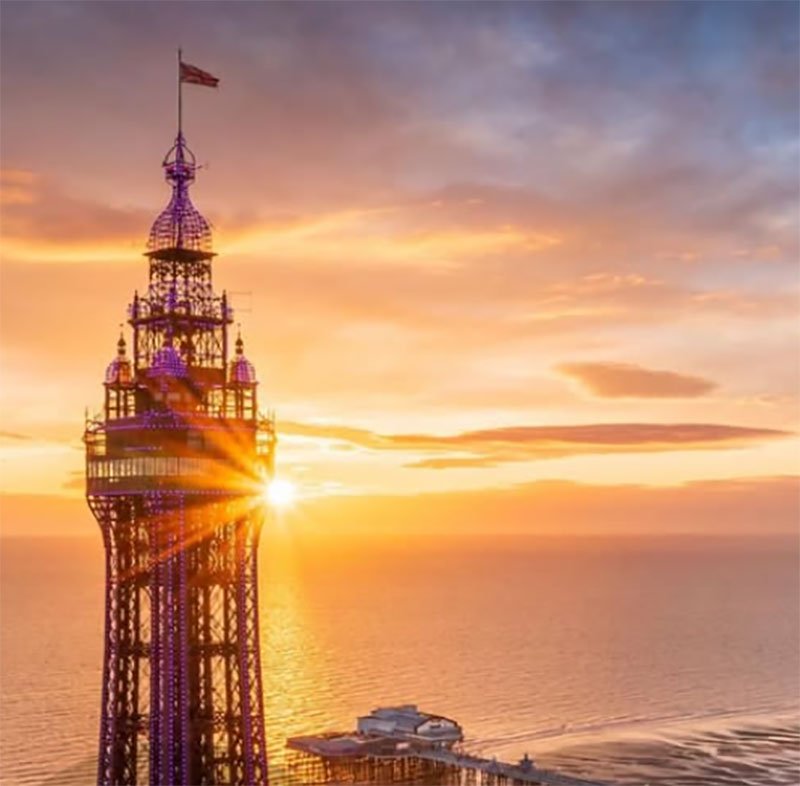
 The Eclipse 2026 UK event took place on Wednesday, 12 August 2026, giving people across Britain the opportunity to see a remarkable deep partial solar eclipse.
Although the UK was outside the path of totality, the eclipse was unusually impressive. Around 90% to 96% of the Sun was covered, depending on location, with some of the highest coverage occurring towards the south-west. Cornwall reached roughly 95%, while Pembrokeshire experienced around 94% and London around 90%.
So, where were the best places to watch Eclipse 2026 in the UK?
The answer depended on more than simply finding the location with the highest percentage of solar coverage. Weather, horizon visibility, local geography and the position of the setting Sun all played an important role.
What Made a Good Eclipse Viewing Location?
The best eclipse-viewing location needed several things at the same time.
First, there needed to be a good chance of clear or mostly clear skies. Second, viewers needed an unobstructed view towards the western horizon, because the Sun became increasingly low in the sky as the eclipse progressed.
A high viewpoint could be particularly useful, while parks, open countryside, coastal viewpoints and other locations away from tall buildings could provide a wider view.
The Royal Observatory Greenwich specifically recommended finding a high point with a clear western horizon for the August 2026 eclipse.
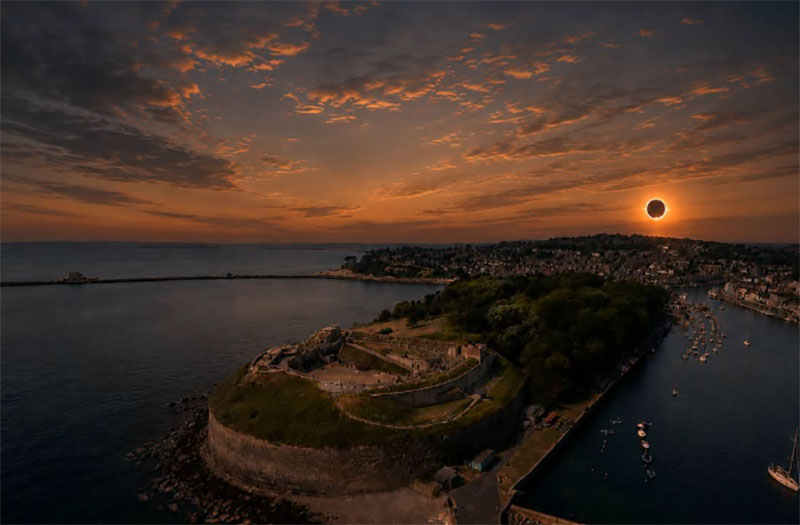
Best Places to Watch Eclipse 2026: Quick Guide
| Location | Approx. Maximum Coverage | Why It Was Interesting |
|---|---|---|
| Cornwall | ~95% | Among the highest UK coverage |
| Pembrokeshire | ~94% | Very deep partial eclipse |
| Cardiff | ~93% | High coverage and western location |
| Bristol | ~93% | High coverage with favourable prospects |
| Southampton | ~93% | Good southern location |
| London | ~90–91% | Excellent accessibility and major-city viewing |
| Birmingham | ~92% | Deep partial eclipse |
| Manchester | ~91% | High coverage, although weather mattered |
Coverage figures varied slightly depending on the precise observing location and calculation method.
1. Cornwall — One of the Best Locations in the UK
Cornwall was one of the standout locations for people hoping to see the deepest possible partial eclipse from the UK.
The Royal Observatory Greenwich reported roughly 95% solar coverage in Cornwall, making the region particularly attractive to eclipse watchers.
The eclipse in Truro began at around 6:18pm BST, reached maximum at approximately 7:16pm, and ended around 8:10pm.
Cornwall also offered another major advantage: open landscapes and coastal areas can provide broad western horizons.
However, the best theoretical coverage does not guarantee the best real-world view. Local cloud and haze could still affect visibility.
2. Pembrokeshire — Excellent Coverage in Wales
Pembrokeshire was another particularly interesting location.
The region experienced approximately 94% coverage, placing it among the areas with the deepest partial eclipse in the UK.
Its position in south-west Wales also made it a strong choice for viewers looking for a combination of high eclipse coverage and a western horizon.
Open coastal locations could provide attractive viewing conditions, although the weather remained an important consideration.
3. Cardiff — A Strong Choice in South Wales
Cardiff experienced approximately 93% solar coverage at maximum eclipse.
The eclipse began at around 6:17pm BST, reached maximum at approximately 7:12–7:13pm, and ended around 8:06–8:07pm.
Cardiff was also positioned within a part of the UK where weather prospects were relatively favourable around the event. The Met Office identified much of Wales as having good chances of clear skies compared with northern and north-western areas.
4. Bristol — High Coverage and Good Viewing Prospects
Bristol experienced a deep partial eclipse, with roughly 93% of the Sun covered.
The combination of high coverage and generally favourable weather prospects across much of southern England and Wales made the Bristol area a strong viewing option.
For observers in and around Bristol, an open location with a clear view towards the west would have been preferable to a crowded urban area surrounded by tall buildings.
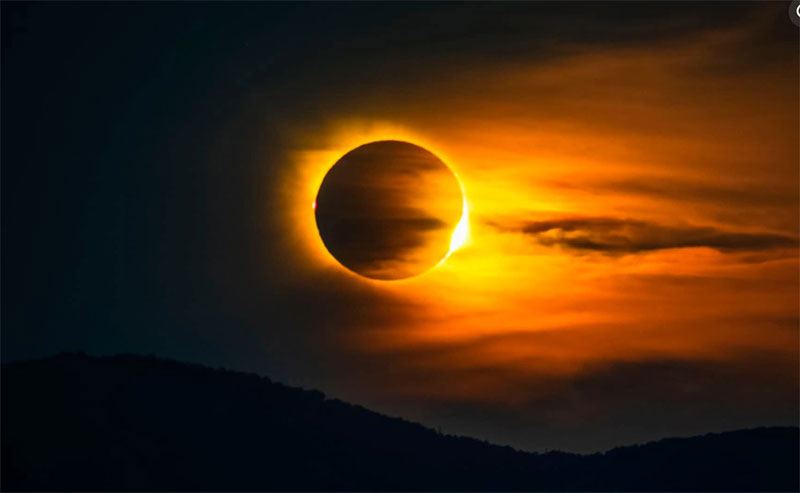
5. London — The Most Accessible Major City
For many people, London was the most practical place to watch Eclipse 2026 simply because of its accessibility.
The eclipse began at approximately 6:17pm BST, reached maximum around 7:12–7:13pm, and ended at approximately 8:06pm. About 90% of the Sun was covered, with Timeanddate calculating the maximum obscuration at around 91%.
London was not the location with the greatest eclipse coverage, but it offered something important: a large number of potential viewing locations within an easily accessible city.
The Royal Observatory Greenwich also hosted an official eclipse viewing event, with safe observation using solar telescopes, eclipse glasses and pinhole projections.
For London viewers, the most important factor was not simply choosing a famous landmark. A location with a clear western horizon was much more valuable.
6. Southampton and the South Coast
The south coast also provided good opportunities for viewers who wanted relatively high solar coverage without travelling as far west as Cornwall.
Southampton experienced around 93% coverage at maximum.
The southern parts of England were also among the areas with generally favourable weather prospects according to the Met Office, although conditions could vary locally.
Open coastal viewpoints and elevated positions could provide useful western views, especially as the eclipse progressed towards sunset.
7. Birmingham and the West Midlands
Birmingham experienced a very deep partial eclipse, with roughly 92% of the Sun covered.
The eclipse began around 6:15pm BST, reached maximum around 7:11pm, and ended around 8:04pm.
The West Midlands had some possibility of cloud around the event, although the Met Office expected many people in the area to have at least some opportunities to see the eclipse.
For Birmingham observers, finding an open location away from buildings and trees was particularly useful.
8. Manchester and Liverpool
The north-western cities of Manchester and Liverpool also experienced a deep partial eclipse.
The eclipse began at approximately 6:13pm BST, reached maximum around 7:10pm, and ended between approximately 8:03pm and 8:04pm.
However, weather conditions were more uncertain than in southern England and Wales.
The Met Office forecast more cloud across northern areas, meaning viewers in Manchester and Liverpool needed a little more luck with local conditions.
What About Scotland?
The eclipse was visible across Scotland, but Scotland was not necessarily the best choice for someone seeking the highest percentage of solar coverage.
The Met Office expected more cloud across parts of Scotland, particularly towards the north and west.
Glasgow and Edinburgh nevertheless experienced an impressive partial eclipse, with maximum occurring at around 7:05–7:06pm BST.
For Scottish viewers, local cloud conditions were arguably just as important as the eclipse magnitude.
What About Northern Ireland?
Northern Ireland was within the partial-eclipse visibility zone, but weather conditions were less favourable.
The Met Office forecast extensive cloud across much of Northern Ireland, making viewing more challenging than in many parts of southern England and Wales.
That does not mean the eclipse could not be seen. A temporary break in the cloud could still provide a short viewing opportunity.
Is the South-West Always the Best Choice?
Not necessarily.
The south-west generally offered greater eclipse coverage, but the best real-world viewing location depended on several factors:
Eclipse coverage: More coverage generally meant a more dramatic partial eclipse.
Weather: Clear skies were essential for direct viewing.
Western horizon: The Sun was setting during the eclipse.
Local obstructions: Trees, buildings and hills could block the Sun.
Accessibility: A theoretically excellent location is not useful if it is difficult or unsafe to reach.
This is why the best location was often the place that offered the best combination of coverage, weather and horizon visibility, rather than simply the highest percentage.
Why Was the Western Horizon So Important?
The August 2026 eclipse took place during the evening.
As the event progressed, the Sun and Moon became increasingly low towards the western horizon.
The Royal Observatory Greenwich advised viewers to find a high point with an unobstructed western view so they could follow more of the eclipse.
A location might have excellent eclipse coverage on a map but still provide a poor view if a hill or tall building blocked the setting Sun.
For this reason, horizon visibility should be a major part of any eclipse-viewing plan.
How Did Weather Affect the Best Places?
Weather changed the ranking of the best locations.
Before the eclipse, the Met Office forecast the most favourable viewing conditions across central, southern and eastern England and Wales. Northern England, Scotland and Northern Ireland faced greater cloud-related challenges.
The Met Office also reported on the day of the eclipse that most of England and Wales were expected to have clear skies and good visibility, while northern and western areas had more cloud.
This means that a location with slightly less eclipse coverage could actually provide a better viewing experience if the sky was clear.
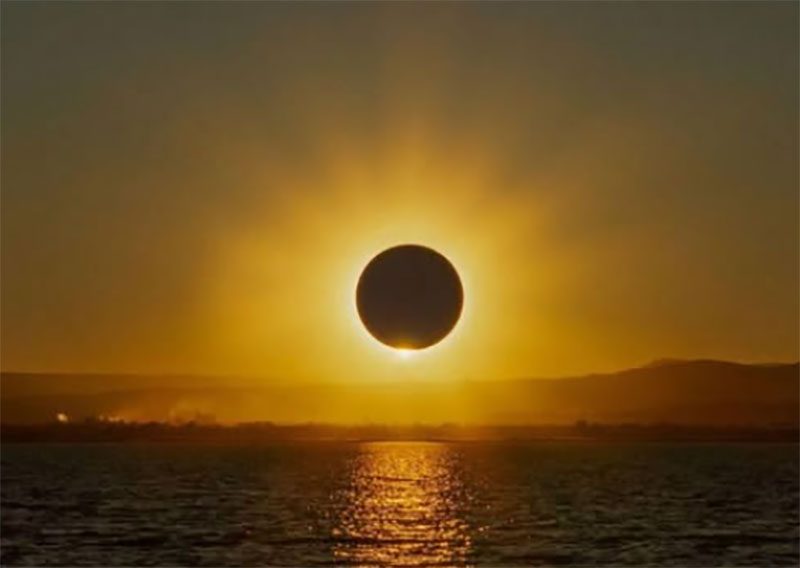
Best Places to Watch Eclipse 2026 for Photography
Photographers had different priorities from casual viewers.
A good eclipse photography location needed:
- A clear western horizon
- A good view of the Sun
- An interesting foreground
- Minimal obstructions
- Safe space for camera equipment
Cornwall and Pembrokeshire offered dramatic coastal landscapes, while London provided opportunities to combine the eclipsed Sun with buildings and the city skyline.
However, anyone photographing the Sun directly needed an appropriate solar filter. Camera lenses and telescopes can concentrate sunlight and should never be used for direct solar viewing without suitable protection.
Best Places for Families
For families, accessibility and safety were often more important than achieving the maximum possible percentage of coverage.
A spacious park, open field or organised astronomy event could be a better choice than travelling long distances to a remote location.
The Royal Observatory Greenwich offered a particularly useful example, using solar telescopes, eclipse glasses and pinhole projections for safe public viewing.
Best Places to Watch Eclipse 2026: My Top Picks
If the goal was maximum UK eclipse coverage, Cornwall was one of the strongest choices.
If the goal was excellent coverage in Wales, Pembrokeshire stood out.
For city accessibility, London was a practical choice.
For southern England, Bristol and Southampton offered strong combinations of coverage and viewing prospects.
For people already living in Birmingham, Manchester, Liverpool, Edinburgh or Glasgow, travelling long distances was not necessarily essential. Local weather and a clear western horizon could be more important than gaining a few additional percentage points of coverage.
Eclipse 2026 UK Viewing Comparison
| Location | Coverage | Main Advantage | Main Challenge |
| Cornwall | ~95% | Highest UK coverage among key locations | Travel and local weather |
| Pembrokeshire | ~94% | High coverage + western location | Weather |
| Cardiff | ~93% | High coverage + good accessibility | Horizon/local obstructions |
| Bristol | ~93% | High coverage + southern location | Urban obstructions |
| Southampton | ~93% | High southern coverage | Horizon visibility |
| London | ~90–91% | Very accessible | Buildings and skyline |
| Birmingham | ~92% | Deep eclipse | Some cloud possible |
| Manchester | ~91% | High coverage | More cloud risk |
| Glasgow | ~91% | Strong partial eclipse | Northern cloud |
| Edinburgh | ~91% | Strong partial eclipse | Northern weather |
Coverage is approximate and can vary according to the precise observing location and calculation method.
Eclipse Viewing Safety
Wherever you watched Eclipse 2026, safety remained essential.
A partial solar eclipse must never be viewed directly with the naked eye.
Ordinary sunglasses are not sufficient. Viewers should use properly certified solar eclipse glasses or safe indirect viewing methods such as a pinhole projector.
The Met Office specifically advised using certified eclipse glasses meeting ISO 12312-2 or indirect viewing techniques.
Where was the best place to watch Eclipse 2026 in the UK?
The south-west, particularly Cornwall, offered some of the highest eclipse coverage. Cornwall experienced roughly 95% coverage, while Pembrokeshire reached around 94%.
Was Cornwall the best place to see Eclipse 2026?
Cornwall was one of the best locations for maximum solar coverage, but weather and horizon visibility also mattered.
Was London a good place to watch Eclipse 2026?
Yes. London experienced around 90–91% coverage and was highly accessible, although buildings and the low western Sun could make observation more difficult.
What was the best part of the UK for eclipse coverage?
The south-western UK generally had the greatest coverage, with Cornwall among the leading locations.
Did Scotland have good eclipse visibility?
The eclipse was visible from Scotland, but cloud conditions were more challenging in many areas than in southern England and Wales.
Was Northern Ireland a good place to watch the eclipse?
Astronomically, the eclipse was visible, but weather forecasts indicated more extensive cloud and less favourable viewing conditions.
What direction should you face to watch the eclipse?
Because the eclipse occurred towards sunset, a clear western horizon was particularly important.
The Best Places to Watch Eclipse 2026 in the UK depended on more than simply finding the highest eclipse percentage.
Cornwall stood out for its approximately 95% coverage. Pembrokeshire offered around 94%, while Cardiff, Bristol and Southampton also experienced very deep partial eclipses. London provided an especially accessible option, while viewers farther north had to pay closer attention to cloud conditions.
Ultimately, the ideal eclipse location combined high solar coverage, clear skies, a wide western horizon and safe viewing conditions.
That is what made the 12 August 2026 eclipse so interesting: the experience was slightly different from every location across Britain, and choosing the right place could make a significant difference to what observers actually saw.
Eclipse 2026 UK: Date, Time, Map, Visibility & What Happened
More Eclipse & Astronomy Guides
- Eclipse 2026 UK: Everything You Need to Know
- Eclipse 2026 UK Time: Exact Timings by Location
- Eclipse 2026 London: Where and When to Watch
- Eclipse 2026 Map: UK Visibility Guide
- Solar Eclipse 2026: What Will You See?
- How to Watch Eclipse 2026 Safely: Eye Protection Guide
- Eclipse 2026 Weather: What UK Viewers Should Know
- Best Places to Watch Eclipse 2026 in the UK
- Eclipse 2026 Photography Guide: How to Photograph a Solar Eclipse
- What Is the Next Solar Eclipse After 2026? UK Dates & Times
Suggested
- Royal Observatory Greenwich
- Timeanddate Eclipse Information
- https://www.nasa.gov/
- European solar eclipses
- 2026 Total Solar Eclipse
writer – anne musrak