
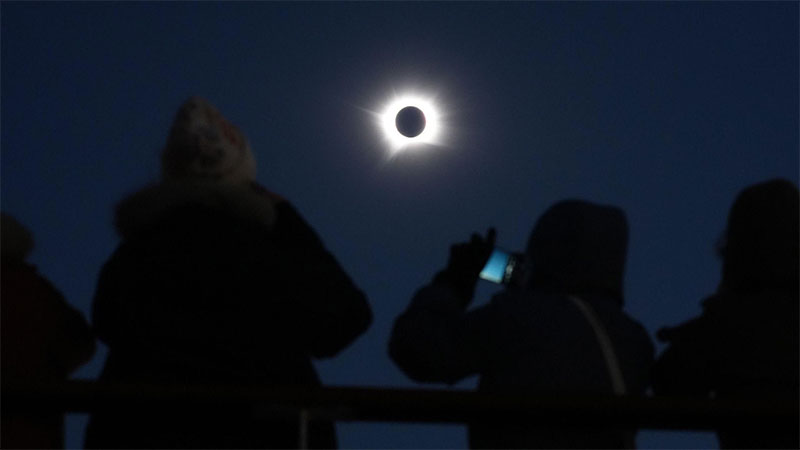
The Eclipse 2026 London event was one of the most memorable astronomical events visible from the capital in recent years. On Wednesday, 12 August 2026, the Moon passed across the Sun, creating a deep partial solar eclipse that was visible from London and much of the United Kingdom.
In London, around 91% of the Sun was obscured at maximum eclipse. The event began at approximately 6:17pm BST, reached its maximum at around 7:13pm, and ended at approximately 8:06pm. The entire partial eclipse lasted about 1 hour and 49 minutes.
Although London did not experience totality, the eclipse was still a spectacular sight. This guide explains where and when to watch Eclipse 2026 in London, how the eclipse progressed, what the sky looked like, and the most important safety information.
When Was Eclipse 2026 in London?
The Eclipse 2026 London solar eclipse took place on 12 August 2026.
For people in London, the key timings were:
| Eclipse Stage | London Time |
|---|---|
| Eclipse begins | 6:17pm BST |
| Maximum eclipse | 7:13pm BST |
| Eclipse ends | 8:06pm BST |
| Total duration | About 1 hour 49 minutes |
| Maximum solar coverage | About 91% |
These timings refer to London local time, British Summer Time (BST). Timeanddate’s calculations give the same start, maximum and end times for London.
What Happened During Eclipse 2026 in London?
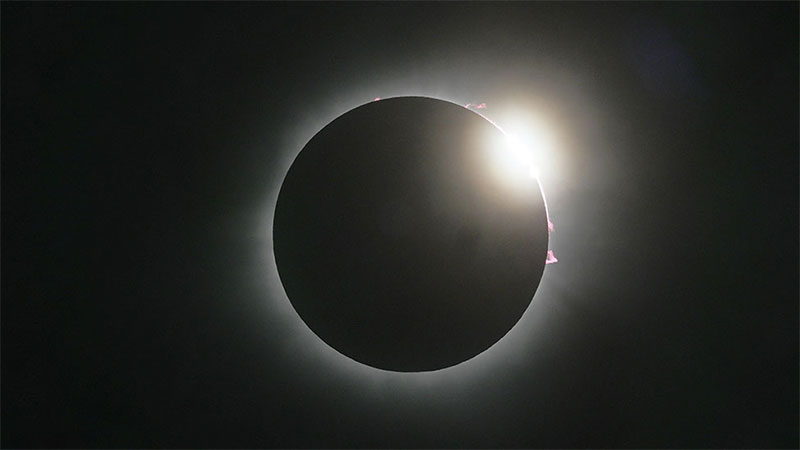
The eclipse began when the Moon first started moving across the visible disc of the Sun at about 6:17pm.
Over the following hour, more of the Sun became covered. At approximately 7:13pm, the eclipse reached its maximum in London, with about 91% of the Sun obscured. After maximum eclipse, the Moon gradually moved away from the Sun, and the partial eclipse ended at around 8:06pm.
Because the Sun was already getting low in the sky, the appearance of the eclipse changed significantly as the evening progressed. The Royal Observatory Greenwich recommended finding a high location with a clear view towards the western horizon to see as much of the event as possible.
What Did the Eclipse Look Like From London?
At maximum eclipse, only a small bright portion of the Sun remained visible.
With around 91% of the Sun covered, the daytime light in London became noticeably different. However, it is important to remember that this was still a partial solar eclipse, not a total eclipse.
The sky did not become completely dark. Instead, the changing sunlight could create an unusual dimming effect that felt more like approaching dusk or a cloudy period of daylight.
The low position of the Sun also made the event visually interesting, particularly for photographers looking for a skyline or landscape in the foreground.
Where Was the Best Place to Watch Eclipse 2026 in London?
There was no single “best” viewing location in London. The most important factor was having an unobstructed view towards the western horizon.
As the eclipse progressed, the Sun and Moon moved lower in the sky. Tall buildings, trees and other obstacles could therefore block the view, particularly during the later stages.
Good viewing conditions generally meant choosing a location that offered:
- A wide, unobstructed western horizon
- A relatively elevated viewpoint
- Minimal obstruction from buildings or trees
- A safe position for observing the Sun
- Good local weather conditions
The Royal Observatory Greenwich specifically noted that a high point with a clear western horizon would help observers see the whole event.
London Parks and Open Areas
Open spaces can be useful for eclipse viewing because they may provide a wider horizon than areas surrounded by tall buildings.
Large parks and open locations across Greater London can offer more flexibility, but the ideal spot depends on the direction of the horizon and local obstructions.
For an event like this, the view of the western sky was more important than simply choosing a famous London landmark.
Can You See an Eclipse From Central London?
Yes.
The eclipse was visible from Central London, including the City of London and surrounding central areas. Timeanddate’s location-specific data show the same main timings of approximately 6:17pm start, 7:13pm maximum and 8:06pm end for Central London.
However, buildings could make observation difficult.
A person standing between tall buildings might have had a much poorer view than someone in an open area with a clear western horizon, even though both were only a few kilometres apart.
Eclipse 2026 London Weather
Weather was one of the biggest uncertainties for anyone hoping to see the eclipse.
Even when the astronomical conditions are perfect, cloud cover can hide the Sun.
For that reason, eclipse observers typically need to consider both the astronomical forecast and the local weather forecast.
The Royal Observatory Greenwich also highlighted the importance of weather conditions, noting that clouds could obscure part or all of the eclipse.
How Much of the Sun Was Covered in London?
At maximum eclipse, approximately 91% of the Sun was obscured in London.
This was slightly less than the coverage seen in some south-western parts of the UK. The Royal Observatory Greenwich reported approximately 90% coverage in London, compared with roughly 95% in Cornwall and about 94% in Pembrokeshire.
This geographical difference is caused by the changing apparent position of the Moon relative to the Sun as viewed from different locations on Earth.
Was Eclipse 2026 Total in London?
No.
The event was a partial solar eclipse in London.
The global eclipse was a total solar eclipse, but the path of totality did not pass through London or the wider UK. Totality was visible from other regions, including parts of Greenland, Iceland and northern Spain.
This distinction is important because the experience of a total eclipse is very different from that of a deep partial eclipse.
Why Was the London Eclipse So Special?
The 2026 eclipse was particularly notable because it produced unusually high coverage across the UK.
The Royal Observatory Greenwich described the event as the greatest level of eclipse coverage visible from the UK and Ireland since the 1999 solar eclipse.
For London, seeing roughly nine-tenths of the Sun covered was an extraordinary astronomical experience, even though the city remained outside the path of totality.
How to Watch a Solar Eclipse Safely
Looking directly at the Sun without appropriate protection can permanently damage your eyes.
Normal sunglasses are not safe for direct solar viewing.
You should also never look at the Sun through:
- An unfiltered telescope
- Unfiltered binoculars
- A camera optical viewfinder
- Other magnifying optical equipment without proper solar filtration
For future solar eclipses, use properly certified solar viewing glasses or a suitable solar filter designed specifically for the equipment being used.
Children should also be supervised during solar observations.
Can You Photograph Eclipse 2026 in London?
Solar eclipses can create excellent photography opportunities, particularly when the Sun is low on the horizon.
A London skyline, building silhouette or open landscape can provide an interesting foreground. However, photography must be carried out safely.
Anyone photographing the Sun directly should use appropriate solar filtration and follow the manufacturer’s safety instructions.
A tripod can also help when using a telephoto lens or when shooting at slower shutter speeds.
Eclipse 2026 London vs Other UK Locations
London was one of many UK cities to experience a deep partial eclipse, but the timing and coverage varied slightly across the country.
For example, the Royal Observatory Greenwich reported:
- London: about 90% coverage
- Bristol: about 93%
- Cardiff: about 93%
- Pembrokeshire: about 94%
- Cornwall: about 95%
The further south-west an observer was, generally the greater the percentage of the Sun covered.
This made south-western locations particularly attractive to serious eclipse watchers.
Eclipse 2026 London: Quick Facts
Date: 12 August 2026
Location: London, United Kingdom
Type: Partial solar eclipse
Start: 6:17pm BST
Maximum: 7:13pm BST
End: 8:06pm BST
Maximum coverage: Approximately 91%
Best viewing direction: Western horizon
Total eclipse in London: No
Frequently Asked Questions
What time was Eclipse 2026 in London?
The eclipse began at approximately 6:17pm BST, reached maximum at 7:13pm, and ended at around 8:06pm.
Was Eclipse 2026 visible from Central London?
Yes. The partial solar eclipse was visible from Central London, although buildings and other obstructions could affect the view.
How much of the Sun was covered in London?
Approximately 91% of the Sun was obscured at maximum eclipse.
Was Eclipse 2026 a total eclipse in London?
No. London experienced a deep partial solar eclipse.
Where was the best place to watch the eclipse in London?
The best location was one with a clear, unobstructed western horizon, preferably from an elevated or open position.
Could you look directly at Eclipse 2026?
No. Proper solar eye protection was required for direct observation of the Sun.
Did the eclipse make London completely dark?
No. Because the eclipse was partial, London did not experience the complete darkness associated with totality.
The Eclipse 2026 London event was a remarkable reminder that even a partial solar eclipse can transform the appearance of the daytime sky.
From 6:17pm to 8:06pm, London experienced a gradual eclipse that reached its maximum at around 7:13pm, when approximately 91% of the Sun was covered.
The event was especially memorable because of its high level of coverage and the unusual evening timing. For observers, having a clear view towards the western horizon was one of the most important factors.
Although London did not experience totality, the 12 August 2026 eclipse will remain an important event in the UK’s recent astronomical history.
Eclipse 2026 UK: Date, Time, Map, Visibility & What Happened
More Eclipse & Astronomy Guides
- Eclipse 2026 UK: Everything You Need to Know
- Eclipse 2026 UK Time: Exact Timings by Location
- Eclipse 2026 London: Where and When to Watch
- Eclipse 2026 Map: UK Visibility Guide
- Solar Eclipse 2026: What Will You See?
- How to Watch Eclipse 2026 Safely: Eye Protection Guide
- Eclipse 2026 Weather: What UK Viewers Should Know
- Best Places to Watch Eclipse 2026 in the UK
- Eclipse 2026 Photography Guide: How to Photograph a Solar Eclipse
- What Is the Next Solar Eclipse After 2026? UK Dates & Times
Suggested
- Royal Observatory Greenwich
- Timeanddate Eclipse Information
- https://www.nasa.gov/
- European solar eclipses
- 2026 Total Solar Eclipse
editor – joge cruch