
How to Get White Clothes White Again (and Get Rid of That Musty Smell While You’re At It)

You know the moment: you pull out a white shirt you were counting on, and instead of crisp white, it’s gone dull and a little gray, maybe yellowed around the collar. Sometimes there’s a sour, damp smell to go with it, even though you washed it recently. Neither problem means the shirt is ruined — both come down to stuff building up in the fabric that a regular wash cycle just isn’t strong enough to strip out. Here’s what’s actually happening, and how to fix it without reaching for chlorine bleach.
Why Whites Turn Yellow or Gray (and Why They Sometimes Smell Musty)
A few different things cause this, and they usually stack on top of each other over time:
- Body oil buildup. Sweat carries proteins, lipids, and salts. Left in the fabric, these oxidize over time and slowly turn bright white cotton a dull, pale yellow.
- Too much detergent. It sounds backwards, but using more detergent than you need doesn’t clean better — it leaves a thin, sticky film on the fibers that actually attracts dust and grime.
- Hard water. If your tap water is high in iron, calcium, or magnesium, those minerals react with detergent over repeated washes and leave a gray tint behind.
- Washing whites with colors. Even a small amount of dye transfer from darker garments will gradually muddy white fabric.
- Trapped moisture. This is the root of that musty smell too — if clothes sit damp in the washer or in a humid closet, mildew spores get a foothold, and that’s what you’re smelling.
When You’re Short on Time: Fast Fixes for Musty Smell (No Washing Required)
Sometimes there’s no time for a full wash. These get you a fresher-smelling shirt in well under an hour.
| Method | Best For | Time |
|---|---|---|
| Vodka & Water Spray | Shirts, polos, sweaters | 10–15 minutes |
| Freezer Method | Denim, heavy knits, activewear | 30–45 minutes |
| Lemon Juice Mist | White cotton and linen | 15–20 minutes |
Vodka spray: Mix equal parts plain, unflavored 80-proof vodka and water in a spray bottle. Mist the underarms, collar, and back, then hang the garment near an open window or fan for about 10 minutes. As the alcohol evaporates, it takes the odor molecules with it.
Freezer method: Seal the dry garment in a plastic freezer bag and leave it in the freezer for 30 to 45 minutes. Cold air doesn’t kill bacteria, but it stops it long enough to knock out a sour smell temporarily. Shake the item out and let it air for a few minutes before wearing.
Restoring Brightness: Baking Soda and Vinegar Instead of Bleach
Chlorine bleach might seem like the obvious fix, but it’s actually rough on fabric — it weakens fibers over time and can even turn synthetic whites yellow instead of fixing them. Baking soda and vinegar do the job more gently, and they tackle the problem from two different angles:
- Baking soda is alkaline. It balances out acidic sweat stains and helps lift embedded oils.
- White vinegar is acidic. It dissolves soap residue and the mineral buildup that hard water leaves behind.
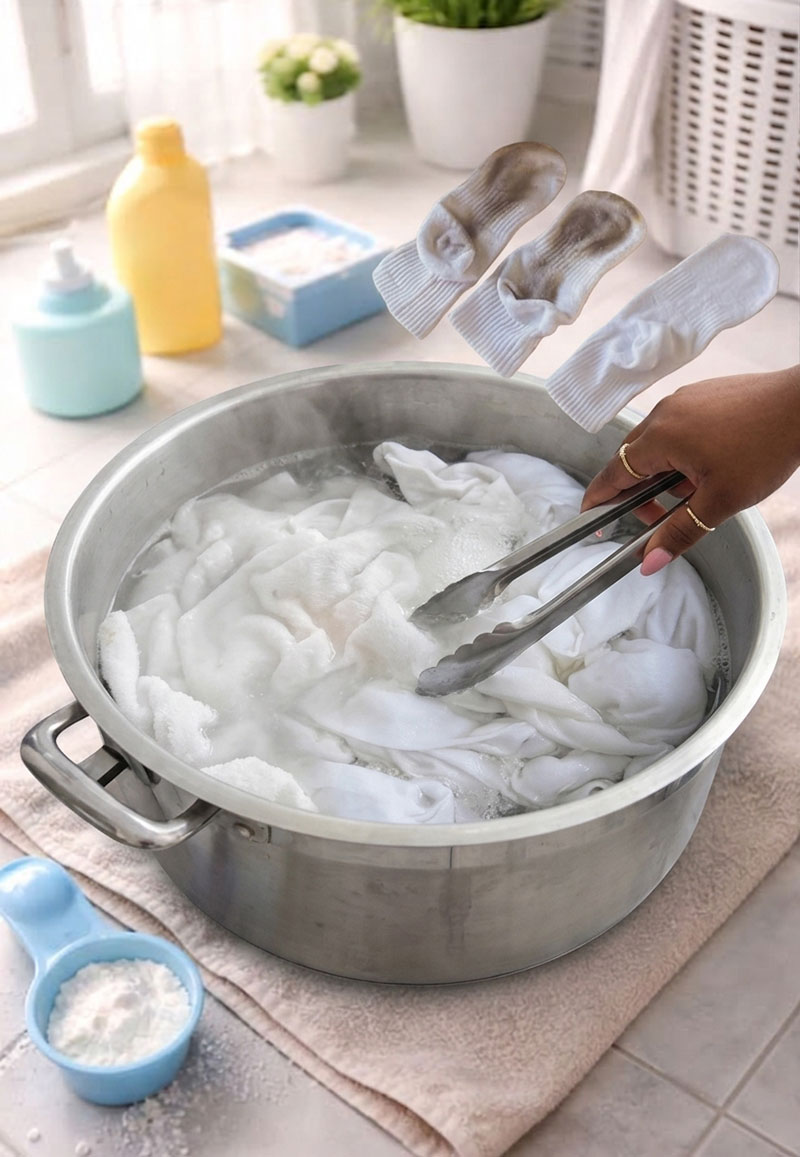
Baking soda pre-soak: Dissolve a cup of baking soda into about 4 liters of warm water. Soak your whites for at least an hour or two — overnight if the yellowing is stubborn.
Baking soda in-wash: Add half a cup directly into the empty drum before loading your whites, then run a normal warm wash.
Vinegar rinse: Pour a cup of distilled white vinegar into the fabric softener compartment and run a warm cycle without adding softener. The vinegar smell disappears completely once the clothes dry — what’s left is softer, brighter fabric.
Getting Damp Towel Smell Out, and Using the Sun to Your Advantage
Towels, heavy hoodies, and thick socks trap moisture in their weave more than lighter fabrics do, which is why they’re often the first things to develop that musty smell — and once it’s there, it can spread to the rest of the load.
Sunlight is genuinely one of the best tools for whites specifically, since UV light doesn’t just dry clothes, it helps bleach and sterilize them too:
- Soak your whites in a bucket of warm water with half a cup of lemon juice for about 30 minutes.
- Wring them out and hang them outside in direct sunlight.
- The combination of UV light and the citric acid from the lemon juice naturally lifts yellowing and kills off mildew bacteria, without the fiber damage bleach can cause.
Habits That Keep Whites Bright and Odor-Free
- Wash whites separately. Even light color transfer adds up over time.
- Don’t overload the machine. Clothes need room to actually tumble and rinse clean.
- Skip fabric softener on whites. It coats fibers in a waxy layer that yellows under heat and traps bacteria in.
- Unload the washer promptly. More than 30 minutes of damp clothes sitting in a closed drum invites mold.
- Let towels dry out fully between uses. Spread them out on a rack rather than leaving them balled up — this alone prevents a lot of musty smell before it starts.
A Few Common Questions
Why does chlorine bleach sometimes make whites turn yellow instead of whiter? It reacts poorly with synthetic fibers like polyester, nylon, and spandex, along with certain fabric coatings, causing a chemical reaction that yellows the material permanently. Oxygen-based bleach or baking soda is a safer bet for those fabrics.
Can I use baking soda and vinegar in the same load? Not at the same time — one’s acidic, one’s alkaline, and combined they neutralize each other. Put baking soda in the drum at the start, and save vinegar for the rinse.
How often should I do this to keep whites looking good? A baking soda soak or vinegar rinse every 3 to 4 washes is usually enough to stop oils and hard water minerals from settling in.
What about stubborn yellowing on collars or underarms specifically? Mix 4 tablespoons of baking soda with 2 tablespoons of hydrogen peroxide into a paste, rub it directly onto the spot, let it sit for 30 minutes, then wash in warm water.
Is it safe to sun-dry all white garments? Yes — sunlight is safe for white cottons, linens, and synthetic blends. Unlike colored clothes, which can fade in strong sun, whites actually benefit from it.
The bottom line: scented fabric softeners and harsh bleach don’t really solve the underlying problem — one masks it, the other can damage the fabric while trying to fix it. Baking soda, white vinegar, lemon juice, and a bit of sunlight get to the actual source: the oils, minerals, and moisture causing the dullness and the smell in the first place.
The Laundry Stain & Whitening Cheat Sheet
Different fabrics need genuinely different treatment — what’s perfectly safe on a cotton t-shirt can wreck a wool sweater. Here’s a quick reference broken down by fabric type, with exact ratios so you’re not guessing.
Quick Reference: What’s Safe for Each Fabric
| Cotton & Linen | Wool & Delicates | Synthetics (Polyester/Spandex) | |
|---|---|---|---|
| Water Temp | Warm to hot | Cold only | Warm, never high heat |
| Acid/Base Treatments | Safe | Mild only | Safe |
| Bleach | No chlorine | No bleach at all | No chlorine |
Cotton & Linen
These are tough, durable fibers — warm water, mild acids, and alkaline boosters like baking soda are all fine. The one thing to avoid is chlorine bleach, which weakens the fibers over time.
Whitening and deodorizing: Soak in 4 liters of warm water with 1 cup of baking soda for 1 to 2 hours, then wash normally, adding 1 cup of white vinegar to the rinse dispenser.
Yellowed collars or underarms: Mix 4 tablespoons of baking soda, 2 tablespoons of 3% hydrogen peroxide, and 1 tablespoon of liquid dish soap into a thick paste. Scrub it into the stain with a soft brush, let it sit for 30 minutes, then wash in warm water.
Damp or musty odor: Either add 1 cup of white vinegar to the rinse, or add half a cup of baking soda straight into the drum before loading clothes. Run a warm cycle, around 100°F.
Sun-bleaching boost: Soak in 4 liters of warm water with half a cup of lemon juice for 30 minutes, wring out, and hang in direct sunlight — the citric acid works with the UV rays to whiten naturally.
Wool, Silk, and Other Delicates
These are protein-based fibers, and they’re a lot more fragile than cotton. High heat, strong acids, baking soda, and chlorine will all degrade them over time. Stick to gentle, cold-water treatments.
Gentle whitening: Mix 2 tablespoons of 3% hydrogen peroxide with 1 tablespoon of wool-safe liquid detergent in 4 liters of cold water. Submerge the garment, swish gently for 3 minutes, let it soak for 15 minutes, then rinse thoroughly with cold water and dry flat.
Odor removal without washing: Mix equal parts plain 80-proof vodka and distilled water in a fine mist spray bottle. Lightly spritz the underarms and heavier seams, then hang in a cool, drafty spot for 15 minutes.
Spot stains: Mix 1 tablespoon of glycerin with 1 tablespoon of gentle wool wash and 2 cups of cold water. Dab it onto the stain with a clean microfiber cloth — don’t rub — and rinse with cold water.
Synthetics and Activewear (Polyester, Nylon, Spandex)
Synthetic fabric attracts and holds onto oil more than natural fibers do, which is why sweat smell tends to linger in it. Skip fabric softener and high heat here — both trap oils in and can melt the elastic.
Deep strip for sweat and oil: Soak in 4 liters of warm water (no hotter than 104°F) with 1 cup of white vinegar and half a cup of oxygen bleach powder, like OxiClean, for 2 to 4 hours. This breaks down oils that have really set into the fabric. Wash in warm water afterward, no softener.
Bacterial odor removal: Add half a cup of baking soda to the drum and wash on warm with a detergent that contains lipase or protease enzymes — those specifically target sweat and body oils.
Quick spray for between washes: Mix half a cup of plain vodka, half a cup of water, and 5 drops of tea tree essential oil. Spray on underarms and high-friction seams right after a workout if you can’t wash the item straightaway.
Three Rules Worth Remembering, No Matter the Fabric
- Never combine vinegar and bleach. Mixing an acid with bleach produces toxic chlorine gas — this one’s non-negotiable.
- Don’t mix baking soda and vinegar directly in the wash. Put them together and they cancel each other out. Baking soda goes in the main wash, vinegar goes in the rinse.
- Test before you commit. Try any paste or hydrogen peroxide mix on a hidden inside seam first, just to make sure the fabric handles it well.
American Cleaning Institute (ACI) – Stain Removal Guide
Good Housekeeping Institute – How to Make Clothes White Again
U.S. Environmental Protection Agency (EPA) – Safer Choice Cleaning Alternatives
How to remove musty smell from clothes (5 Proven Home Remedies)
How to Remove Sweat Smells From Clothes (5 Easy Hacks)
how to get white clothes white again -3 Golden Rules for All Fabrics
How to Get Rid of Musty Smell in Clothes, Fast
How to Remove Musty Smell From Clothes: 7 Fast Fixes
writer – androw corry