
Getting a keratin hair treatment can leave your hair smoother, shinier, and easier to manage. But one question often comes up as soon as you leave the salon: how long should you wait before washing your hair?
For many traditional keratin smoothing treatments, the commonly recommended waiting period is 48 to 72 hours. However, there is no single rule that applies to every product. Some express treatments allow earlier washing, while other formulas require a longer waiting period. Always follow the instructions for the specific treatment you received.
Washing too soon may affect the smoothness and longevity of the results, but accidentally getting your hair wet does not automatically mean the treatment has failed.
In this guide, you will learn how long to wait before washing keratin-treated hair, whether washing after 24 or 48 hours is acceptable, what to do if your hair gets wet accidentally, and how to choose suitable shampoo and conditioner. You will also find advice for curly hair, at-home treatments, and keratin-bond hair extensions.
Top 5 Hair Wash
Buy Now
-
Native Coconut & Vanilla Shampoo and Conditioner Contain Naturally Derived Ingredients | All Hair Types
-
TRESemmé Rich Moisture Hydrating Shampoo & Conditioner Set 28 oz 2 Pack
-
Keratin Complex – Color Care Smoothing Shampoo
-
Dr. Groot Hair Thickening Shampoo, Korean Hair Care with Biotin, Rosemary Oil to Help Volumize Thinning, Damaged Hair, Hydrate Hair and Scalp, Biotin Shampoo, Scalp Revitalizing Solution
-
Head & Shoulders Classic Clean Anti-Dandruff Shampoo, 72-Hour Dandruff Protection, 1% Pyrithione Zinc, 28.2 fl oz
How Long Should You Wait to Wash Hair After a Keratin Treatment?
For a traditional keratin smoothing treatment, a 48–72-hour waiting period is a common recommendation, provided the manufacturer’s instructions specify that interval. Some modern or express formulas have different requirements, including same-day or earlier washing.
The treatment name alone is not enough to determine the correct timing. The specific formula, application process, and manufacturer’s aftercare instructions matter.
If you are unsure which treatment was used, contact your stylist before washing your hair.
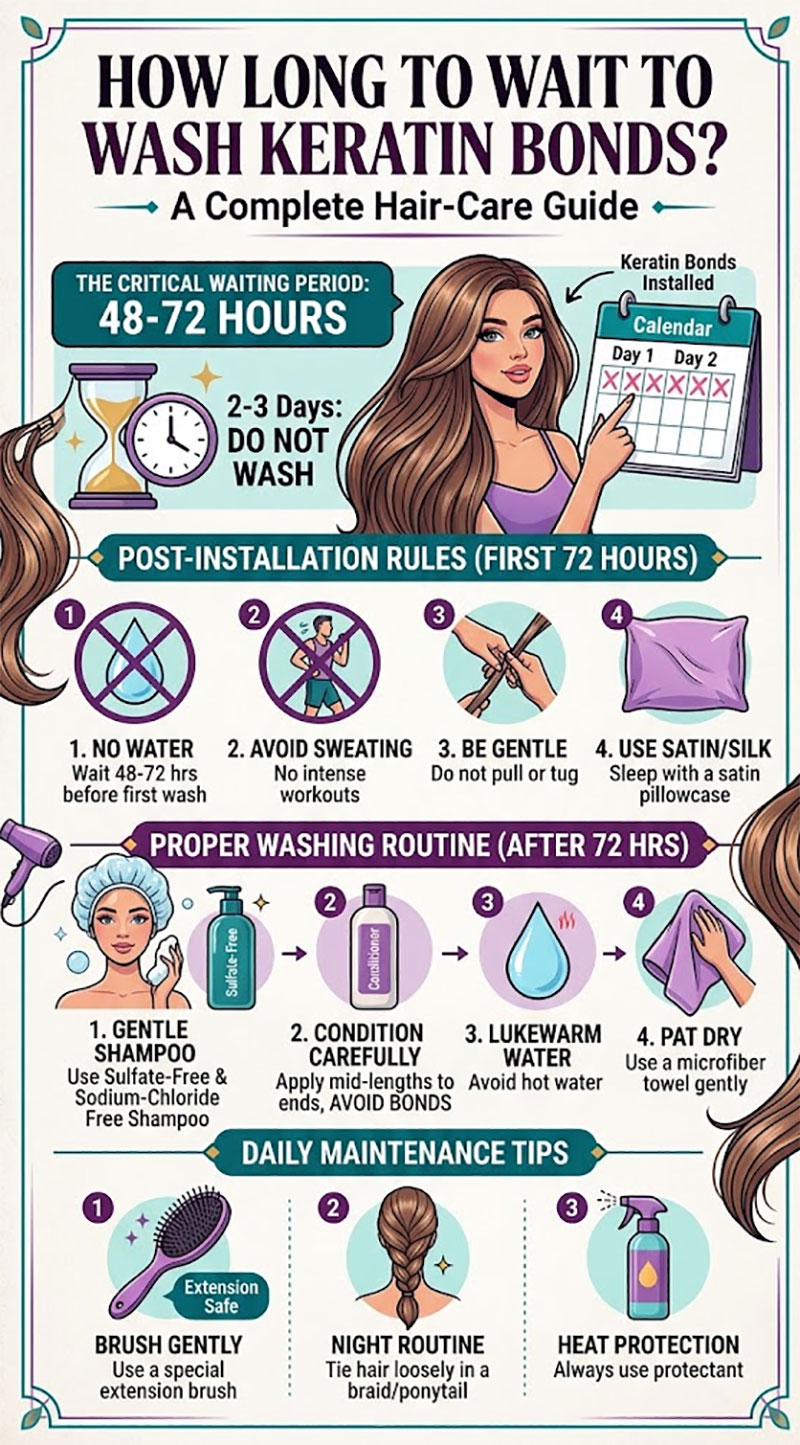
Quick guide to first-wash timing
| Time since treatment | What should you do? |
|---|---|
| First 24 hours | Keep your hair dry if your product instructions require a waiting period. |
| After 24 hours | Wash only if the specific formula permits it. |
| After 48 hours | Some treatments may permit washing; others require another day. |
| After 72 hours | Many traditional treatments that specify a three-day wait can be washed, provided their instructions agree. |
| Same-day washing | Appropriate only when the particular treatment explicitly allows it. |
This table is a general guide, not a replacement for the instructions supplied with your product. Cleveland Clinic recommends waiting a few days before the first shampoo, while treatment manufacturers may provide more specific instructions for individual formulas.
Is 24 hours enough after a keratin treatment?
Sometimes, but not always.
Certain express smoothing formulas allow washing earlier than traditional treatments. If your stylist used one of these products and confirmed that washing after 24 hours is acceptable, follow that product-specific guidance.
For a traditional treatment that requires 48 or 72 hours, washing after just one day may be premature. The result could be less smooth than expected or may not last as long.
If you cannot identify the product, ask your stylist rather than assuming that every keratin treatment follows the same schedule.
Is 48 hours enough?
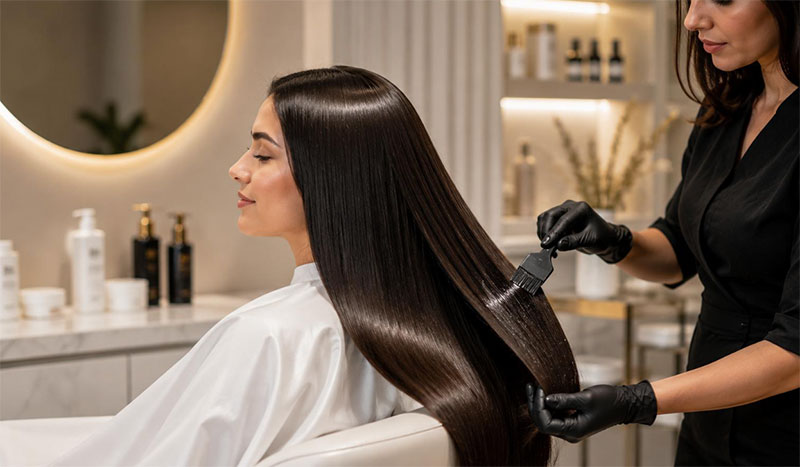
Two days may be sufficient for a formula that specifies a 48-hour waiting period. However, some treatments require 72 hours or another product-specific interval.
For example, if you had your treatment on Monday at 2 p.m. and the instructions say to wait 48 hours, the earliest permitted wash would be Wednesday at 2 p.m. If the instructions specify 72 hours, you would wait until Thursday at 2 p.m.
Count the hours from the completion of your treatment rather than relying only on the number of calendar days.
Do you really need to wait three days?
Not for every treatment.
The familiar three-day rule applies to many traditional keratin smoothing services, but it is not universal. Some formulas are designed for earlier washing, and some professional products have their own specific aftercare procedures.
The most reliable approach is simple:
- Identify the exact treatment or product used.
- Check its written aftercare instructions.
- Confirm the first-wash time with your stylist if anything is unclear.
- Avoid experimenting with an earlier wash just because another brand permits it.
Waiting longer than the product requires is not automatically better, either. Follow the prescribed interval rather than inventing a longer one.
What Happens If You Wash Your Hair Too Early?
Washing your hair before the recommended time may interfere with the intended result of some keratin smoothing treatments. The extent of the effect depends on the formula, how early you washed, and the way the treatment was performed.
Possible outcomes include:
- Reduced smoothness: Your hair may not remain as sleek as expected.
- Earlier return of frizz: Humidity or your natural texture may become more noticeable.
- Uneven-looking results: Some sections may appear smoother than others.
- Shorter-lasting results: The treatment may wear off sooner than expected.
These outcomes are possible, not guaranteed. Washing your hair at 48 hours instead of 72 hours does not necessarily ruin every treatment.
What if you washed after only 24 hours?
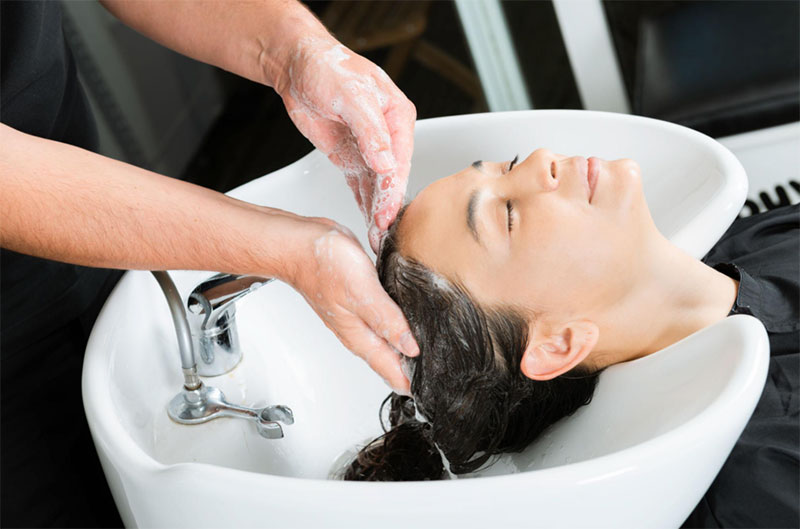
First, check the instructions for the product you received. If the product permits washing after 24 hours, you may not have done anything wrong.
If the instructions required a longer interval, do not panic. One early wash does not automatically mean you need another treatment.
Observe your hair over the following days. If it still looks smooth and manageable, continue with the recommended maintenance routine. If you notice substantial changes, contact your stylist and explain when you washed your hair.
Avoid immediately repeating the chemical treatment or using excessive heat to compensate. These steps may introduce unnecessary stress to your hair.
What happens if you wash your hair after 48 hours?
The answer depends on whether your treatment requires 48 or 72 hours.
If the manufacturer specifies 48 hours, washing at that point follows the stated schedule. If the instructions require 72 hours, washing at 48 hours means you washed earlier than recommended.
You may notice little difference, or the smoothing result may not last as expected. There is no reliable universal percentage by which results will decrease, so claims that washing at 48 hours always ruins a treatment should be treated cautiously.
If you are still within the waiting period, waiting until the recommended time is the safer choice for preserving the intended result.

How to Wash Your Hair After a Keratin Treatment
Once the recommended waiting period has ended, a gentle washing routine can help you maintain your hair’s appearance and manageability.
Step 1: Check the aftercare instructions
Before getting into the shower, confirm that the waiting period has passed and that you are using suitable products.
If the salon gave you a specific shampoo or conditioner, check whether those products are intended for your treatment. Do not assume that all products marketed as keratin hair care are interchangeable.
Step 2: Detangle gently
If your hair is tangled, gently work through it before washing, provided this is consistent with your treatment instructions.
Use a wide-tooth comb or an appropriate detangling brush. Start at the ends and gradually work upward rather than pulling forcefully from the roots.
If your stylist instructed you to avoid combing or manipulating your hair during an initial setting period, follow that instruction until the restriction ends.
Step 3: Wet your hair with lukewarm water
After the permitted waiting period, wet your hair with comfortably warm or lukewarm water.
Very hot water is not necessary for effective cleansing and may leave some hair feeling drier. A comfortable temperature and gentle handling are usually sufficient.
Allow the water to run through your hair without aggressively rubbing or twisting it.
Step 4: Apply an appropriate shampoo
Choose a shampoo compatible with your specific keratin treatment.
Apply it primarily to your scalp and massage gently with your fingertips. Avoid scratching with your nails or aggressively bunching the lengths together.
If your scalp is oily, concentrate on cleansing the scalp rather than repeatedly scrubbing the entire length of your hair.
Rinse thoroughly. If one wash removes the oil and buildup, there is no automatic need to shampoo twice.
Step 5: Condition the lengths
Apply a suitable conditioner to the mid-lengths and ends, unless your product instructions say otherwise.
Work it through gently, allow the recommended contact time, and rinse thoroughly.
If your hair becomes weighed down easily, use a smaller amount. If your lengths are dry or textured, you may benefit from more conditioning through the ends.
Step 6: Dry without unnecessary friction
Gently squeeze excess water from your hair using your hands or a soft towel. Avoid rubbing the hair vigorously.
You can air-dry or use a hair dryer according to your treatment instructions. If you use heat, choose a suitable setting and avoid repeatedly applying high heat to the same section.
A heat protectant may be useful if compatible with your hair-care routine.
Step 7: Check the result
Once your hair is dry, assess its texture, smoothness, and manageability.
A keratin smoothing treatment does not necessarily eliminate your natural texture completely. The result depends on the formula, your original hair texture, and the treatment process.
Do not judge the entire treatment by whether your hair looks perfectly straight immediately after its first wash.
What Shampoo Should You Use After Keratin?
The best shampoo is one that cleans your scalp effectively while remaining compatible with your treatment and hair type.
Many salon professionals recommend sulfate-free shampoos for maintaining certain smoothing treatments. Some manufacturers also specify sodium-chloride-free products.
These labels are not interchangeable, and neither label automatically proves that a product is suitable for every treatment.
Sulfate-free shampoo
Sulfates are cleansing agents used in many shampoos. Depending on the formulation and how frequently you wash, some cleansing products may leave treated hair feeling drier or cause a smoothing result to fade more quickly.
A sulfate-free shampoo may be a useful option if your treatment manufacturer recommends it.
However, sulfate-free does not mean that a product is automatically gentle, moisturizing, or compatible with every chemical treatment. Consider the complete formula and the instructions supplied with your treatment.
Sodium-chloride-free shampoo
Some keratin treatment manufacturers recommend avoiding sodium chloride in aftercare products.
If your product instructions specifically require sodium-chloride-free shampoo, check the ingredient list instead of relying only on the front label.
Do not assume that all shampoos containing sodium chloride will have the same effect on every treatment. Product compatibility depends on the particular formulation and manufacturer guidance.
Can you use regular shampoo?
Possibly, but check first.
A regular shampoo may be suitable for some treatments, while others come with specific restrictions. If you cannot find the instructions, ask your stylist for a compatible alternative.
You do not necessarily need an expensive salon product. The important considerations are compatibility, effective cleansing, and how your hair and scalp respond.
What about conditioner, hair masks, and oils?
Conditioners and moisturizing products can help improve the feel and manageability of hair lengths and ends.
For natural hair that has received a smoothing treatment, product placement depends on your hair type and the instructions you received. There is no universal rule that all oils or conditioners must be avoided at the roots after every smoothing service.
For keratin-bond extensions, however, heavy oils and rich conditioners are commonly kept away from the attachment points because they may affect the bonds or contribute to slippage. That is a different aftercare situation.
Choose products based on the service you actually received.
How Often Should You Wash Keratin-Treated Hair?
There is no single ideal washing frequency for everyone.
Your scalp’s oil production, exercise routine, climate, hair texture, product use, and the type of treatment all influence how often you need to wash.
Some people find that washing a few times a week works well. Others need more frequent cleansing because their scalp becomes oily quickly or they exercise regularly.
A practical washing schedule
Use the following as a starting point, not a strict rule:
- Oily scalp: Wash when your scalp needs cleansing, using a compatible shampoo.
- Dry or textured hair: You may prefer less frequent washing if your scalp remains comfortable and clean.
- Frequent exercise: Cleanse according to sweat and scalp needs rather than forcing yourself to wait several days.
- Product buildup: Adjust your routine with a compatible cleansing product instead of allowing persistent buildup to accumulate.
Avoid sacrificing scalp hygiene solely to extend the life of a cosmetic treatment.
Does washing less often make keratin last longer?
Frequent washing can contribute to the gradual fading of some smoothing treatments, which is why manufacturers may recommend limiting unnecessary washing.
However, washing less often does not guarantee a specific treatment lifespan. The formula, hair characteristics, and maintenance routine all play a role.
The goal is to find a balance between maintaining the cosmetic result and keeping your scalp clean and comfortable.
How Long to Wait to Wash Keratin Bonds at Home
At-home keratin treatments vary significantly. Some are rinse-out products, some are smoothing kits that use heat, and others are conditioning products that contain keratin without performing a salon-style straightening treatment.
These products should not all be treated as equivalent.
Read the instructions before applying the product
Before using an at-home treatment:
- Read the complete product instructions.
- Check when the first wash is permitted.
- Follow the specified application and processing times.
- Use the recommended rinsing method.
- Follow all heat-styling and ventilation precautions.
- Do not extend the processing time or change the formula to imitate a salon service.
If the instructions say to rinse immediately, do not leave the product in your hair for three days simply because some salon treatments require a waiting period.
Likewise, if the product requires a period without washing, do not assume you can rinse it after 24 hours.
What if the package does not explain when to wash?
Contact the manufacturer or a qualified stylist before proceeding.
If the ingredients, application instructions, or intended use are unclear, avoid guessing. The FDA advises consumers to review ingredients and take precautions when considering hair-smoothing products, particularly those that may release formaldehyde when heated.
Do not apply a professional chemical smoothing formula at home unless it is specifically intended for consumer use and you can follow its safety instructions.
Washing Keratin-Treated Curly Hair
Curly hair requires a routine that considers both the treatment and the natural curl pattern.
A keratin smoothing treatment may reduce frizz or loosen curls, depending on the formula. It does not necessarily mean that every curl will disappear.
When can you wash curly hair after keratin?
The waiting period is determined by the treatment, not simply by whether your hair is curly.
If your stylist used a formula requiring 72 hours, follow that interval. If a specific curl-friendly smoothing product allows an earlier wash, follow its instructions instead.
Curly hair does not automatically require a longer or shorter waiting period.
How should you wash curly hair after treatment?
Once washing is permitted:
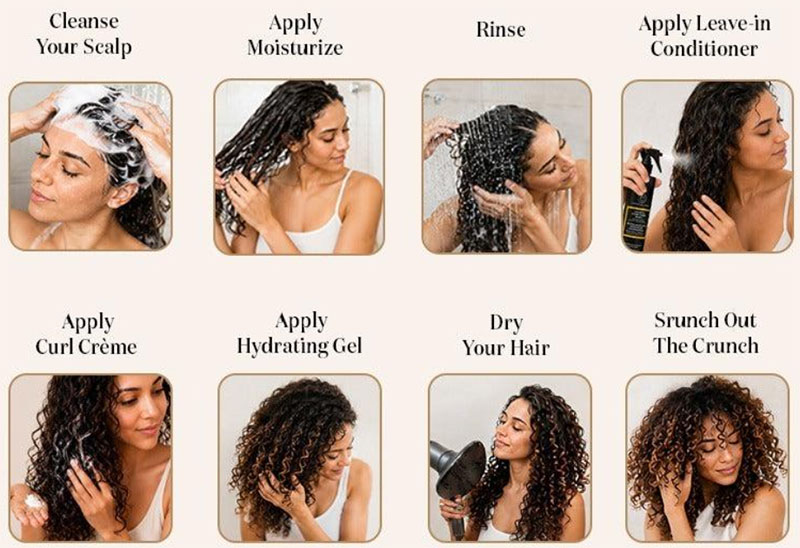
- Detangle gently using a method appropriate for your curl pattern.
- Wet your hair with lukewarm water.
- Apply a compatible shampoo to your scalp.
- Avoid rough rubbing that creates unnecessary tangles.
- Condition the lengths and ends.
- Use an appropriate leave-in product if compatible with your treatment.
- Allow your curls to dry using a method that suits your hair.
If you use a diffuser, choose a suitable temperature and airflow. Avoid excessive heat, especially if your hair is already dry or fragile.
Will washing remove your curls?
Washing may reveal the actual result of the smoothing treatment, but it does not necessarily restore your original curl pattern immediately.
Some formulas are designed to reduce frizz while preserving much of the natural texture. Others produce a straighter appearance.
Your original curl pattern, the treatment formulation, and the application process all influence the outcome. Ask your stylist what level of smoothing to expect before the procedure.
What If Your Hair Gets Wet Before the Waiting Period Ends?
Accidental wetting can happen in the shower, during exercise, in the rain, or while washing your face.
The most important thing is to avoid panic and follow the product’s instructions.
If rain gets your hair wet
If your treatment instructions require dry hair during the waiting period, gently blot away excess moisture without rubbing aggressively.
Contact your stylist if the hair becomes substantially wet or develops visible bends or changes in texture.
Do not automatically repeat the entire treatment.
If you accidentally showered or washed your hair
Check the product instructions and contact your stylist for advice.
Explain when the treatment was performed, how long afterward the hair was washed, and which shampoo you used.
Your stylist can advise whether you should simply continue with normal aftercare or arrange an assessment. Avoid immediately applying additional chemical products to correct the result.
What if your hair becomes sweaty?
Sweat introduces moisture and salts, and heavy sweating may complicate aftercare if your product requires the hair to remain dry.
During the initial waiting period, avoid activities likely to soak your hair when practical. If you sweat heavily, gently manage the moisture and ask your stylist whether any additional steps are appropriate for your formula.
Once the waiting period has ended, wash as needed with a compatible shampoo.
Can You Comb, Tie, or Style Your Hair During the First Few Days?
Some traditional keratin treatments have specific restrictions on combing, tying, clipping, or bending the hair during the initial setting period. Other formulas have different instructions.
Follow the aftercare guidance for the product used.
Can you comb your hair after a keratin treatment?
If the instructions permit gentle combing, use a suitable comb and avoid pulling or creating unnecessary tension.
If your stylist tells you to leave your hair undisturbed for a specified period, respect that restriction.
Can you tie your hair in a ponytail?
Some treatments advise against tight ponytails, clips, headbands, or tucking hair behind the ears during the initial period because they may leave bends in the hair.
If your product has this restriction, keep your hair loose until the recommended interval ends.
Can you use dry shampoo?
Dry shampoo may help absorb excess oil between washes, but it should not be assumed safe for every treatment or every scalp.
Check whether your stylist permits it during the waiting period. If the scalp becomes uncomfortable or irritated, do not use additional products simply to avoid washing.
Keratin Treatments vs. Keratin-Bond Hair Extensions
The phrase “keratin bonds” can refer to two different services. Understanding this distinction is essential because the aftercare instructions are not identical.
Keratin smoothing treatments
A smoothing treatment is applied to natural hair to reduce frizz, improve manageability, or create a smoother finish. Depending on the formula, heat may be used during application.
The first-wash interval is determined by the specific treatment instructions.
Keratin-bond or K-tip extensions
Keratin-bond extensions use small bonded attachment points to secure extension hair to natural hair.
Their aftercare focuses on protecting the attachment points, preventing tangles, keeping individual bonds separated, and avoiding excessive product buildup around the bonds.
Some extension specialists recommend waiting around 24–48 hours after installation before the first wash, but the exact interval depends on the installation product and stylist’s instructions.
Key differences
| Care consideration | Smoothing treatment | Keratin-bond extensions |
|---|---|---|
| Main purpose | Smooth or reduce frizz in natural hair | Attach additional hair |
| First-wash timing | Product-specific; some traditional formulas specify 48–72 hours | Installation-specific; follow the extensionist’s guidance |
| Shampoo technique | Gently cleanse the scalp and hair | Cleanse carefully around the attachment points |
| Conditioner placement | Follow product and hair-type guidance | Often concentrate conditioner on mid-lengths and ends, away from bonds |
| Detangling | Use a suitable method for your hair texture | Pay particular attention to the root area and separating individual bonds |
| Drying | Follow the smoothing treatment’s instructions | Dry and handle the attachment area as recommended by the extension specialist |
If you have both a smoothing treatment and keratin-bond extensions, ask your stylist for a combined care routine. Do not assume the instructions for one service automatically override the other.
Common Keratin Aftercare Mistakes to Avoid
Even after the first wash, your routine can influence how your hair looks and feels.
1. Assuming every treatment has the same waiting period
The 72-hour rule is common, but some products have different requirements. Confirm the actual formula and follow its instructions.
2. Washing too early because the hair feels oily
Oily roots can be frustrating, but if your treatment requires a waiting period, avoid washing early without confirming that it is permitted.
Before your appointment, ask your stylist how to manage oily roots during the initial days.
3. Choosing shampoo based only on the front label
Words such as “keratin,” “repair,” and “smooth” do not guarantee compatibility. Review the ingredients and the manufacturer’s recommendations.
4. Using excessive heat
Frequent high-temperature styling can contribute to dryness and damage. Use suitable heat settings and avoid unnecessary repeated passes with a flat iron.
5. Overusing protein products
Keratin-containing conditioners and repair products may be helpful for some hair types, but more is not always better. Consider the complete formulation and how your hair responds instead of layering multiple treatments automatically.
6. Ignoring scalp discomfort
Burning, persistent itching, a rash, or other unusual symptoms should not be dismissed as normal aftercare.
Stop using the suspected product and seek appropriate medical advice if you develop a concerning reaction.
Safety Considerations for Keratin Hair Treatments
Hair smoothing is a cosmetic service, but some formulas can present chemical-exposure concerns.
The U.S. Food and Drug Administration explains that certain hair-smoothing products contain formaldehyde, formalin, or methylene glycol, or release formaldehyde when heated. Exposure may irritate the eyes, nose, throat, lungs, or skin. Not all keratin or smoothing products contain these ingredients.
Before receiving a treatment, consider asking your salon:
- What is the exact product name?
- Can I review the ingredient list?
- Does the formula contain formaldehyde or an ingredient that releases it when heated?
- What ventilation and safety precautions are used?
- What are the product’s aftercare instructions?
- Is the formula appropriate for my hair and scalp?
Do not rely on the phrase “keratin treatment” alone to determine a product’s safety.
If you experience significant eye or respiratory irritation, breathing difficulty, or a serious skin reaction during or after treatment, leave the exposure area and seek appropriate medical assistance. Severe or rapidly worsening symptoms warrant urgent care.
The FDA’s consumer guidance provides further information about identifying ingredients and reducing exposure risks.
Frequently Asked Questions
How long should I wait to wash my hair after a keratin treatment?
Many traditional treatments recommend waiting 48–72 hours, but some formulas allow earlier washing. Follow the instructions for your specific product.
Can I wash my hair 24 hours after a keratin treatment?
Only if the product’s instructions permit it. Some express formulas allow earlier washing, while other treatments require a longer waiting period.
What happens if I wash my hair 48 hours after keratin?
If your treatment permits washing after 48 hours, that is consistent with its instructions. If it requires 72 hours, washing early may affect the smoothness or longevity of the result, although it does not automatically ruin the treatment.
Do I need to wait three days before washing keratin-treated hair?
Not always. Three days is a common recommendation for certain traditional formulas, but other products have different instructions.
What shampoo should I use after a keratin treatment?
Use a shampoo compatible with your treatment. Many manufacturers recommend sulfate-free products, and some specify sodium-chloride-free formulas. Check the instructions for your particular product.
How soon can I comb my hair after a keratin treatment?
Follow your stylist’s instructions. Some treatments restrict combing or styling during the initial setting period, while others permit gentle handling.
What should I do if my hair gets wet too early?
Gently blot excess moisture without rubbing. Contact your stylist if the hair becomes substantially wet or develops bends. Do not automatically repeat the treatment.
Are keratin-bond extensions the same as keratin treatments?
No. Smoothing treatments are applied to natural hair to change its appearance and manageability. Keratin-bond extensions use bonded attachment points to secure additional hair. Their washing and maintenance instructions differ.
Conclusion
Knowing how long to wait to wash keratin-treated hair helps you protect the result of your salon visit without following unnecessary restrictions.
For many traditional keratin smoothing treatments, the first wash is recommended after 48–72 hours. However, the correct timing depends on the exact product, so the manufacturer’s instructions and your stylist’s advice should take priority over a universal rule.
Once washing is permitted, use compatible shampoo and conditioner, handle your hair gently, and adjust your washing frequency to your scalp’s needs.
If you have keratin-bond extensions rather than a smoothing treatment, follow extension-specific instructions to protect the attachment points and reduce tangling.
Above all, avoid guessing. A few minutes spent confirming the right aftercare routine can help you make better decisions for your hair and scalp.
FAQ
The following FAQ section is suitable for the article’s end. Keep these questions and answers visible on the published page if you use the matching structured data below.
1. How long should I wait to wash my hair after a keratin treatment?
Many traditional keratin smoothing treatments recommend waiting 48–72 hours before the first wash. Some formulas allow earlier washing, so follow the instructions for your specific treatment.
2. Can I wash my hair 24 hours after a keratin treatment?
Only if your product’s instructions permit it. Some express treatments allow earlier washing, while others require a longer waiting period.
3. What happens if I wash my hair 48 hours after keratin?
If your treatment allows washing after 48 hours, you can follow that schedule. If it requires 72 hours, washing early may affect the smoothness or longevity of the result, but it does not automatically ruin the treatment.
4. Do I need to wait three days before washing keratin-treated hair?
Not always. Three days is a common recommendation for certain traditional treatments, but other products have different aftercare requirements.
5. What shampoo should I use after a keratin treatment?
Choose a shampoo compatible with your treatment. Many manufacturers recommend sulfate-free products, while some also specify sodium-chloride-free formulas. Check the instructions for your particular product.
6. How soon can I comb my hair after a keratin treatment?
Follow your stylist’s guidance. Some treatments restrict combing and styling during the initial setting period, while others permit gentle handling.
7. What should I do if my hair gets wet too early?
Gently blot away excess moisture without rubbing. If your hair becomes substantially wet or develops bends, contact your stylist for product-specific advice.
8. Are keratin-bond extensions the same as keratin treatments?
No. Keratin smoothing treatments are applied to natural hair, whereas keratin-bond extensions use bonded attachment points to secure additional hair. Their washing and maintenance instructions differ.
External Source Recommendations
1. U.S. Food and Drug Administration (FDA)
Primary source for cosmetic product safety
Formaldehyde in Hair Smoothing Products: What You Should Know
Use for: formaldehyde-related ingredients, possible exposure effects, ingredient-label checks, and consumer precautions.
2. Cleveland Clinic
Medical and consumer health guidance
What You Need to Know About Keratin Treatments
Use for: general treatment information, benefits, aftercare, and potential risks.
3. Medical News Today
Consumer health explainer
Keratin Hair Treatment: Overview, Benefits, Care, and More
Use for: cross-checking general care recommendations, washing frequency, and treatment limitations.
4. Hair.com by L’Oréal
Hair-care and product guidance
Keratin Treatments: The Full Expert’s Guide to Trying One
Use for: consumer-oriented aftercare explanations and product-related context. Treat brand recommendations as product-specific rather than universal rules.
5. Keratin Bonds Hair Studio
Specialist extension-maintenance guidance
K-Tip Aftercare and At-Home Maintenance
Use for: distinguishing extension maintenance from smoothing-treatment aftercare, including bond separation, detangling, and conditioner placement.
Editor – Jursika